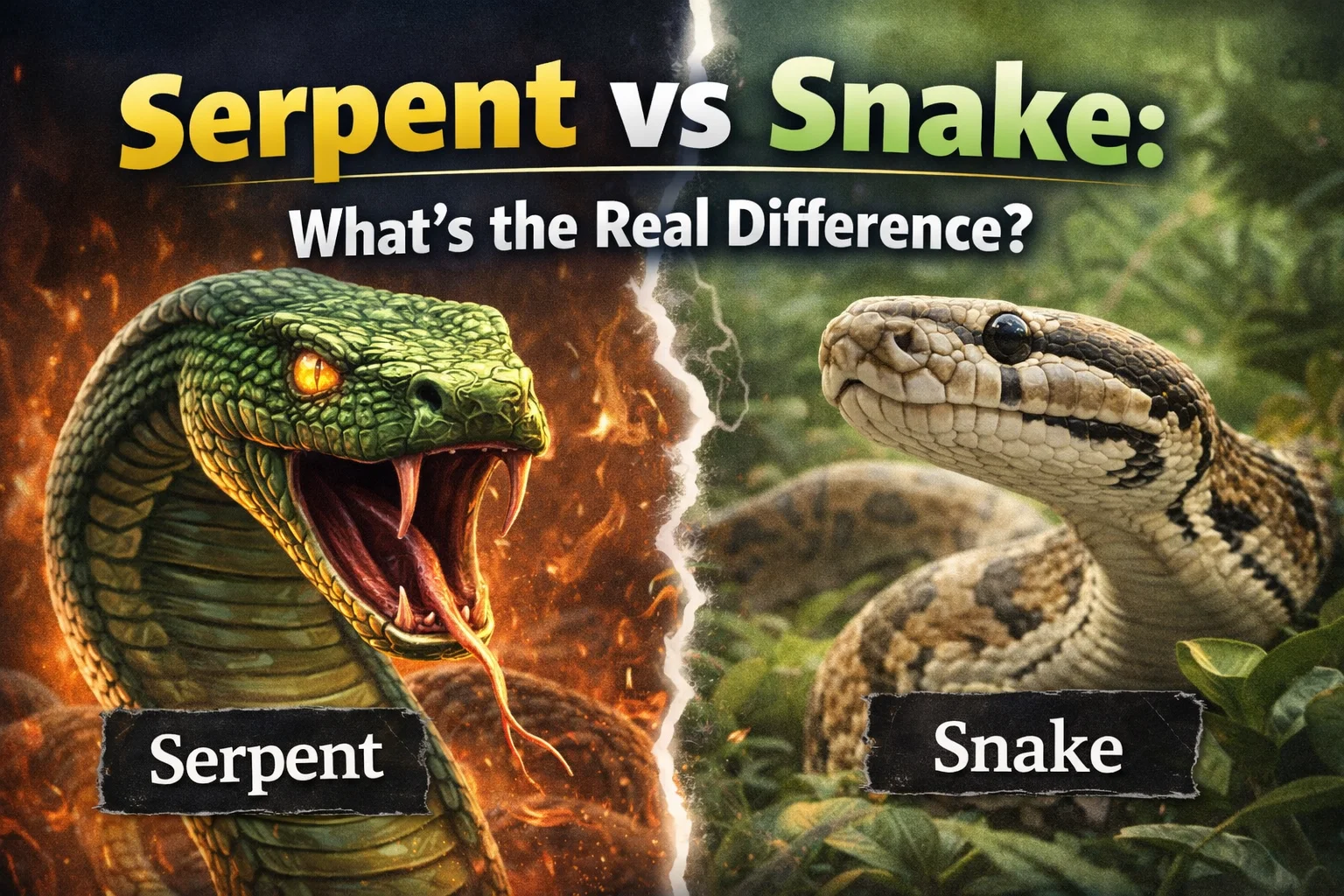
Many people use the words serpent and snake as if they mean the same thing. In everyday talk, that often works. Both words describe long, legless reptiles that move by slithering. But when you look closer, you may notice that the two words are not always used in the same way.
Understanding Serpent vs Snake can help you read books, watch movies, or study animals with more clarity. The difference is mostly about language, history, and context rather than science. In simple terms, a snake is the common modern word for the animal, while a serpent is often used in literature, religion, myths, or poetic writing.
This guide explains everything you need to know about Serpent vs Snake. We will look at meaning, history, culture, and real-life examples so you can clearly understand when to use each word.
What Does the Word Snake Mean?
The word snake is the most common term used today for these reptiles. It describes animals with long bodies, no legs, and flexible jaws. Snakes belong to the reptile family and live in many parts of the world.
Scientists prefer the word snake when studying these animals. There are more than 3,000 snake species on Earth. Some snakes are tiny and harmless, while others are large and venomous.
Snakes move by slithering across the ground using muscles and belly scales. Many snakes eat small animals such as mice, frogs, birds, or insects.
Here are simple examples of how people use the word snake:
- I saw a snake in the garden.
- Some snakes are poisonous.
- A snake can swallow prey larger than its head.
When discussing Serpent vs Snake, the word snake is the modern and scientific term.
What Does the Word Serpent Mean?
The word serpent also refers to a snake-like creature, but it is used in a different way. It is an older and more formal word. You often see it in religious texts, myths, legends, and poetic writing.
Writers use the word serpent to create drama or symbolism. In many stories, serpents represent danger, wisdom, temptation, or mystery.
Examples include:
- The serpent guarded the ancient temple.
- A golden serpent protected the treasure.
- The hero faced a giant serpent in the cave.
In the discussion of Serpent vs Snake, serpent usually carries a symbolic or literary meaning rather than a scientific one.
The Main Difference Between Serpent vs Snake
The biggest difference between Serpent vs Snake is how the words are used. Both can refer to the same animal, but they appear in different contexts.
Here is a simple comparison table.
| Feature | Snake | Serpent |
|---|---|---|
| Meaning | A real reptile animal | Often symbolic or literary |
| Usage | Everyday language | Stories, religion, myths |
| Tone | Simple and modern | Dramatic and poetic |
| Field | Science and biology | Literature and culture |
In short:
- Snake = scientific and everyday word
- Serpent = literary or symbolic word
Understanding this difference makes Serpent vs Snake easier to remember.
Why the Word Serpent Sounds More Dramatic
The word serpent feels more dramatic because it has a long historical background. It comes from older languages like Latin and Old French.
Writers choose serpent when they want to create mystery or tension in a story. Compare these two sentences:
- A snake moved through the grass.
- A serpent slithered through the dark forest.
Both describe the same animal, but the second sentence feels more intense. That emotional effect is why authors prefer serpent in fantasy or mythology stories.
This dramatic tone is one of the main reasons people discuss Serpent vs Snake today.
Serpents in Religion and Mythology
The topic of Serpent vs Snake becomes more interesting when we explore religion and mythology. Many cultures used the image of a serpent in their stories.
Here are some examples.
| Culture | Serpent Meaning |
|---|---|
| Biblical tradition | Temptation and deception |
| Ancient Egypt | Protection and royal power |
| Greek mythology | Healing and medicine |
| Asian myths | Wisdom and transformation |
One of the most famous examples appears in the Garden of Eden, where a serpent tempts Adam and Eve. Because of this story, many people associate serpents with trickery or danger.
However, other cultures see serpents as wise or protective creatures.
Snakes in Science and Nature
In science, the word snake is always preferred. Scientists study snakes as part of the reptile group called Serpentes.
Snakes are cold-blooded animals. This means they depend on outside heat to control body temperature. They live in many environments, including forests, deserts, grasslands, and oceans.
Here is a table showing some well-known snake species.
| Snake Species | Known For | Habitat |
|---|---|---|
| King Cobra | Long venomous snake | Forests of Asia |
| Green Tree Python | Bright green color | Tropical forests |
| Anaconda | One of the largest snakes | South American rivers |
| Garter Snake | Harmless garden snake | North America |
Learning about these animals shows the practical side of Serpent vs Snake.
How Literature Uses Serpents
In literature, serpents often symbolize deeper ideas. Writers use serpents to represent danger, wisdom, or temptation.
Fantasy novels often describe giant serpents guarding treasure or living in ancient ruins. These creatures feel more magical than ordinary snakes.
For example, a story might describe a giant sea serpent rising from the ocean. This creates a strong image in the reader’s mind.
Because of this symbolism, authors prefer the word serpent when writing dramatic scenes.
Are All Serpents Actually Snakes?
Biologically speaking, yes. In most cases, a serpent is simply a snake. There is no scientific group called serpents that is different from snakes.
However, myths sometimes describe creatures that look like snakes but are much larger or magical.
Examples include:
| Mythical Serpent | Description |
|---|---|
| Sea Serpent | Giant snake-like creature living in oceans |
| Dragon Serpent | Winged or fire-breathing serpent |
| World Serpent | Massive serpent encircling the world |
These creatures are fictional, but they play an important role in mythology.
Common Examples of Snakes
Snakes come in many shapes and sizes. Some are harmless, while others have venom.
Here are a few common examples.
| Snake | Size | Danger Level |
|---|---|---|
| Garter Snake | Small | Harmless |
| Python | Very large | Non-venomous but powerful |
| Cobra | Medium to large | Highly venomous |
| Anaconda | Extremely large | Constrictor |
These real animals show how diverse snakes are across the world.
When Should You Use Serpent or Snake?
Choosing between the two words depends on the situation. The table below makes the choice easy.
| Situation | Best Word |
|---|---|
| Talking about animals | Snake |
| Writing a science article | Snake |
| Writing a fantasy story | Serpent |
| Religious or mythological text | Serpent |
| Everyday conversation | Snake |
This simple guide helps clarify Serpent vs Snake in everyday writing.
How Language Changed Over Time
The word serpent was once more common in English. It came from Latin and Old French and was widely used in ancient texts.
Over time, the shorter word snake became more popular in daily speech. People often choose simpler words in conversation.
Today, serpent is mostly used in literature, religion, or dramatic storytelling. Snake remains the everyday word.
This historical shift explains why the debate about Serpent vs Snake still exists.
Frequently Asked Questions
Is a serpent the same as a snake?
Yes. In most situations, a serpent is simply another word for a snake. The difference is mostly about language style and context.
Why does the Bible use the word serpent?
Many religious texts were translated from older languages. Translators chose the word serpent because it sounded more formal and symbolic.
Are sea serpents real?
Sea serpents mostly appear in myths and legends. Scientists believe many sightings were actually whales, giant eels, or large fish.
Which word is correct: serpent or snake?
Both words are correct. However, snake is the modern and scientific term used most often today.
Why do writers prefer the word serpent?
Writers use serpent because it sounds dramatic and mysterious. It helps create strong imagery in stories.
Are serpents studied in science?
Scientists study snakes, not serpents. The word serpent is rarely used in scientific research.
Conclusion
Understanding Serpent vs Snake helps you see how language works. Both words describe the same type of reptile, but they serve different purposes in communication.
A snake is the everyday and scientific term used when talking about real animals. A serpent is more symbolic and often appears in mythology, religion, and storytelling.
Knowing the difference helps you choose the right word for the right situation. If you are writing about nature or science, snake is usually the best choice. If you want a dramatic or symbolic tone, serpent may be the better option.
Language is full of interesting word pairs like this. Learning the difference between Serpent vs Snake not only improves your writing but also deepens your understanding of culture, history, and storytelling.