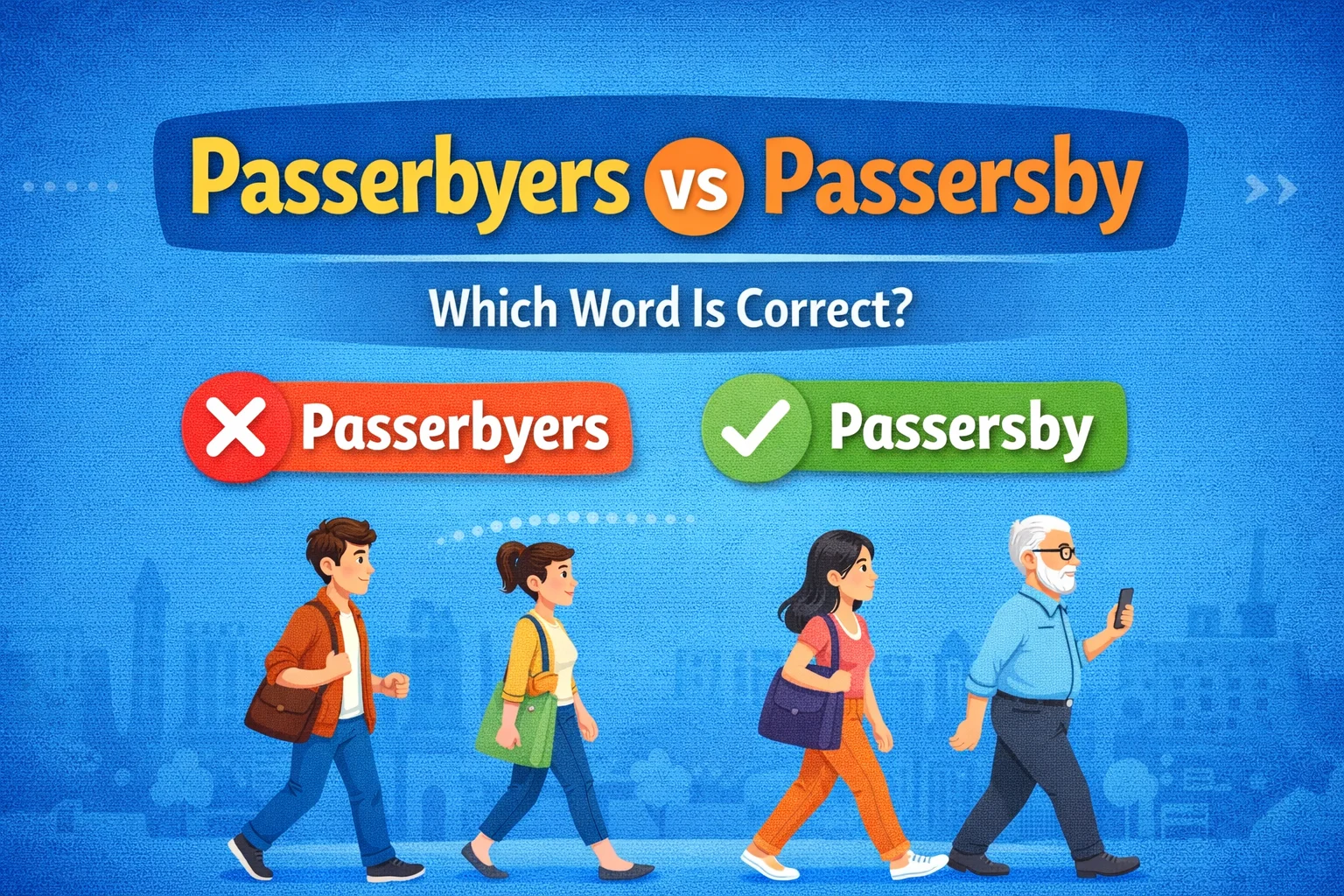
Many English learners feel confused about Passerbyers vs Passersby. At first glance, both words may look correct. They seem similar, and both relate to people walking past something. But only one of them is actually correct in standard English.
Understanding the difference between Passerbyers vs Passersby is important if you want to write clearly and professionally. This small grammar detail can make a big difference in emails, blogs, school work, and even business writing.
The good news is that the rule is simple once you understand how the word is formed. In this guide, we will explore the meaning, grammar rule, examples, and common mistakes related to Passerbyers vs Passersby. By the end, you will know exactly which word to use and why.
What Does “Passerby” Mean?
Before discussing Passerbyers vs Passersby, we first need to understand the base word: passerby.
A passerby is a person who walks past a place or an event. The person is not involved. They are simply passing by.
For example, imagine a street accident. Some people may stop to help. Others just walk past without stopping. Those people are called passersby.
Here are a few simple examples:
- A passerby called the police after seeing the accident.
- The lost wallet was found by a passerby.
- A passerby helped the old man cross the street.
Understanding this base word makes the Passerbyers vs Passersby rule much easier.
Passerbyers vs Passersby: Quick Comparison
To clearly understand Passerbyers vs Passersby, look at this simple comparison table.
| Word | Correct or Incorrect | Meaning | Example |
|---|---|---|---|
| Passerby | Correct | One person passing by | A passerby helped the child. |
| Passersby | Correct | Multiple people passing by | Several passersby watched the event. |
| Passerbyers | Incorrect | Not standard English | ❌ Several passerbyers watched the event |
This table makes it easy to see that passersby is the correct plural form.
Why “Passerbyers” Sounds Confusing
When people hear the phrase Passerbyers vs Passersby, they often assume that “passerbyers” must be correct.
Why?
Because most English plural words add -s or -ers at the end. For example:
- worker → workers
- teacher → teachers
- runner → runners
So some writers naturally assume:
passerby → passerbyers
But this is incorrect.
The word passerbyers is not accepted in standard English. It sometimes appears online, but grammar experts consider it a mistake.
This confusion is the main reason people search for Passerbyers vs Passersby.
The Correct Plural Form: Passersby
The correct plural of passerby is passersby.
So when discussing Passerbyers vs Passersby, the winner is clearly passersby.
Why does this happen?
Because in compound nouns, the plural form often applies to the main noun, not the final word.
In this case:
- main noun → passer
- modifier → by
So we add the plural to passer, not to by.
That is how we get:
passerby → passersby
Here are some examples:
- Several passersby watched the street performer.
- The police asked passersby if they saw anything.
- A few passersby stopped to help.
How Compound Nouns Affect Plural Forms
To understand Passerbyers vs Passersby better, it helps to look at other compound nouns.
Compound nouns combine two or more words to create a new meaning.
Examples include:
- mother-in-law
- attorney general
- runner-up
In many of these words, the plural appears in the main noun, not the last word.
Examples of Similar Grammar Patterns
| Singular | Plural |
|---|---|
| Passerby | Passersby |
| Mother-in-law | Mothers-in-law |
| Attorney general | Attorneys general |
| Runner-up | Runners-up |
Seeing these patterns makes the Passerbyers vs Passersby rule easier to understand.
Examples of Passersby in Sentences
Real examples help make the Passerbyers vs Passersby rule easier to remember.
Here are simple sentences using the correct plural form:
- Several passersby stopped to watch the street magician.
- The injured cyclist was helped by kind passersby.
- Passersby quickly gathered around the street accident.
- The singer attracted many curious passersby.
- Police asked passersby for information.
Notice that passersby always refers to multiple people passing by.
Using correct examples like these makes the Passerbyers vs Passersby difference clear.
Common Mistakes People Make
Many people accidentally make grammar mistakes when writing about Passerbyers vs Passersby.
Here are the most common errors:
| Incorrect Word | Why It Is Wrong | Correct Word |
|---|---|---|
| Passerbyers | Wrong plural formation | Passersby |
| Passerbys | Adds plural to the wrong part | Passersby |
| Passer bys | Incorrect spacing | Passersby |
These mistakes happen because English plural rules can sometimes feel inconsistent.
But once you understand Passerbyers vs Passersby, it becomes easy to avoid them.
Why This Grammar Rule Matters
Some people wonder why the Passerbyers vs Passersby difference even matters.
The answer is simple: clarity and professionalism.
Correct grammar helps readers trust your writing. It also improves credibility in professional communication.
For example, imagine writing a news article:
Incorrect: Several passerbyers witnessed the event.
This sentence looks unprofessional and confusing.
Correct: Several passersby witnessed the event.
The second sentence looks clear and correct.
Small grammar details like Passerbyers vs Passersby can affect how readers view your writing.
Simple Trick to Remember the Correct Word
If you struggle with Passerbyers vs Passersby, try this easy trick.
Think about the word passer.
The people doing the action are passers.
The word by simply describes movement.
So the plural becomes:
passers + by = passersby
This quick trick helps you remember the correct answer to Passerbyers vs Passersby every time.
When to Use “Passerby” vs “Passersby”
Understanding Passerbyers vs Passersby also means knowing when to use singular and plural forms.
| Form | Usage | Example |
|---|---|---|
| Passerby | One person | A passerby reported the accident. |
| Passersby | More than one person | Several passersby reported the accident. |
Using the correct form makes your writing clearer and more professional.
Frequently Asked Questions
1. Is passerbyers a real word?
No. Passerbyers is not considered correct English. The proper plural form is passersby.
2. What is the plural of passerby?
The correct plural form is passersby.
3. Why is it passersby and not passerbyers?
Because passerby is a compound noun. The plural applies to the main noun, which is passer.
4. Can I say passerbys?
No. Passerbys is also incorrect. Standard English uses passersby.
5. Is passerby one word or two?
It is usually written as one word: passerby.
6. When should I use passersby?
Use passersby when referring to multiple people who pass by a place or event.
Conclusion
The confusion around Passerbyers vs Passersby is common, especially for English learners and writers. Both words may look correct at first glance, but only one follows standard grammar rules.
The correct plural form of passerby is passersby, while passerbyers is considered incorrect. This happens because passerby is a compound noun, and the plural form applies to the main noun “passer.”
Learning rules like Passerbyers vs Passersby can greatly improve your writing. It helps your content look more professional, trustworthy, and polished.
Next time you write about people walking past an event or place, remember this simple rule.
Always use passersby, not passerbyers.