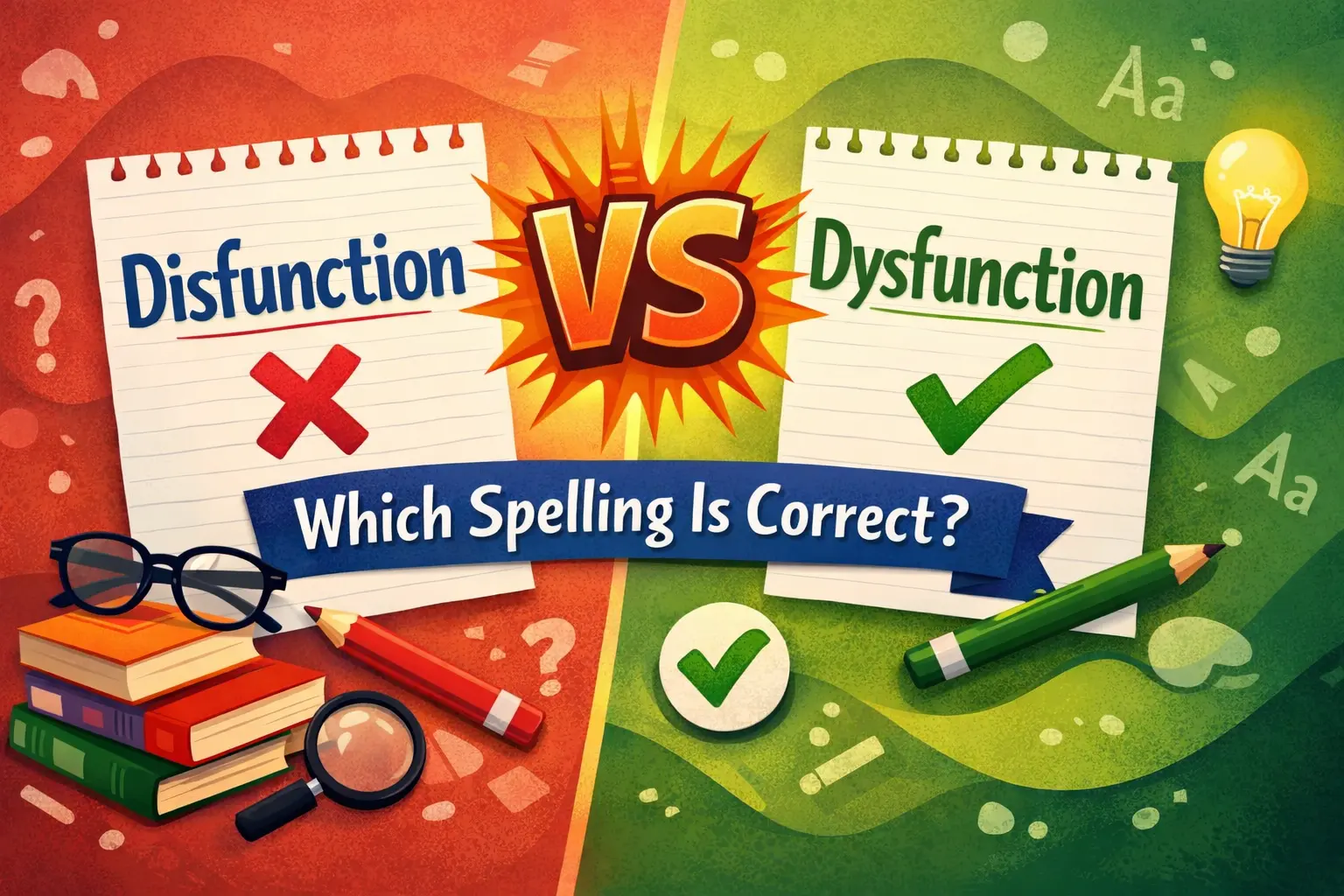
Many people feel confused when they see Disfunction vs Dysfunction written in different places. One spelling appears in articles, while the other pops up in online searches or informal writing. Because of this, readers often wonder which one is correct and which one is a mistake.
This confusion is very common. English has many tricky spellings. Small changes in letters can change a word completely. That is exactly what happens when people compare Disfunction vs Dysfunction.
In simple terms, only one of these spellings is correct in standard English. The other is usually considered a spelling error. However, understanding why people mix them up helps you remember the correct version easily.
In this guide, we will explain the difference between Disfunction vs Dysfunction in very simple language. You will learn the correct spelling, the meaning, real examples, and tips to avoid mistakes. By the end, you will feel confident using the word in conversations, writing, and professional work.
What Does Dysfunction Mean?
The word dysfunction is the correct spelling in English. It refers to something that does not work the way it should.
The word is commonly used in many areas such as health, psychology, technology, and social behavior. In simple words, dysfunction means a problem or failure in how something operates.
For example, a body organ may stop working properly. A machine may fail to perform its task. Even relationships or families can experience dysfunction.
Here are some simple examples:
- A heart problem can cause organ dysfunction.
- A computer error can lead to system dysfunction.
- Poor communication can create family dysfunction.
The word comes from two parts. The prefix “dys” means bad, difficult, or abnormal. The word “function” means to work or operate. Together, they describe something that works poorly or incorrectly.
Understanding this meaning helps people quickly see why dysfunction is the standard spelling used in dictionaries and academic writing.
What Is Disfunction?
The word disfunction often appears online, but it is usually a misspelling of dysfunction.
English spelling rules explain why this mistake happens. Many words start with the prefix “dis”, which means not or opposite. Examples include:
- disagree
- disconnect
- dislike
Because of these familiar patterns, some writers assume that disfunction must also be correct. However, the word actually uses the prefix “dys”, not “dis.”
As a result, most dictionaries and grammar experts consider disfunction incorrect. You will rarely see it used in professional writing, books, or academic papers.
Sometimes search engines show the term because many users type it incorrectly. That is why discussions about Disfunction vs Dysfunction appear frequently online.
Remember this simple rule:
If you are writing formally, always use dysfunction.
Disfunction vs Dysfunction: The Key Difference
When comparing Disfunction vs Dysfunction, the difference is simple but important.
Dysfunction is the correct spelling and appears in dictionaries.
Disfunction is generally considered a spelling mistake.
The confusion happens because both prefixes sound similar when spoken. Many people cannot easily hear the difference between “dis” and “dys.”
However, the meanings of these prefixes are different:
- Dis- means not or opposite
- Dys- means bad, abnormal, or difficult
Since the word describes something working poorly, the prefix dys makes more sense.
For example:
Correct: The machine stopped due to dysfunction.
Incorrect: The machine stopped due to disfunction.
So whenever you see the debate Disfunction vs Dysfunction, remember that only one spelling is accepted in standard English.
Why People Confuse Disfunction vs Dysfunction
Many English learners and even native speakers mix up Disfunction vs Dysfunction. This confusion happens for several reasons.
First, pronunciation plays a role. When people say the word quickly, the difference between “dis” and “dys” is very small. Both sounds can feel almost identical in everyday speech.
Second, English has many words that start with dis. Because of this pattern, writers assume the same rule applies here.
Another reason is typing mistakes. When people search online, they often type quickly. Search engines then record these errors, making the misspelled version appear more common.
Finally, autocorrect tools sometimes fail to fix the mistake. This allows the incorrect spelling to spread across websites, blogs, and forums.
Understanding these reasons helps writers avoid confusion and use the correct spelling confidently.
The Origin of the Word Dysfunction
To truly understand Disfunction vs Dysfunction, it helps to know the origin of the word.
The term dysfunction comes from Greek and Latin roots used in medical language. The prefix dys- comes from Greek and means bad, difficult, or abnormal.
The second part, function, comes from Latin and means performance or activity.
When combined, the word literally means “abnormal or impaired functioning.”
Medical professionals began using the term many years ago to describe problems in the body. Over time, the word expanded into psychology, technology, and everyday speech.
For example:
- brain dysfunction
- sexual dysfunction
- organizational dysfunction
Because of its scientific roots, the spelling dysfunction has remained consistent in dictionaries and professional writing.
Examples of Dysfunction in Everyday Life
The word dysfunction appears in many real-life situations. Understanding these examples helps clarify the meaning.
In medicine, doctors often discuss organ dysfunction. This happens when a body part cannot perform its normal role. For instance, kidney dysfunction may affect the body’s ability to remove waste.
In families, the term family dysfunction describes unhealthy relationships. Poor communication, conflict, or lack of support can create this situation.
Workplaces can also experience dysfunction. When teams lack clear leadership or cooperation, productivity often drops.
Technology offers another example. A computer system may suffer from software dysfunction, causing errors or crashes.
These examples show how the word applies to many areas of life. No matter the context, the idea remains the same: something is not working the way it should.
How to Remember the Correct Spelling
If you struggle with Disfunction vs Dysfunction, a simple memory trick can help.
Think about the word dyslexia. It also starts with dys and describes difficulty with reading. Both words share the same Greek prefix meaning “difficulty” or “problem.”
This connection makes it easier to remember the correct spelling.
Another helpful tip is to focus on meaning. The word describes a problem with functioning. The prefix dys specifically relates to problems or abnormalities.
You can also rely on spell-check tools or dictionaries while writing. These tools usually highlight the incorrect spelling.
With practice, the correct version becomes natural and easy to remember.
When the Word Dysfunction Is Commonly Used
The word dysfunction appears frequently in professional and academic writing. Several fields use it regularly.
In medicine, doctors describe issues like heart dysfunction, liver dysfunction, or immune dysfunction.
In psychology, experts discuss emotional or behavioral dysfunction. This may include unhealthy patterns in thinking or relationships.
In business, leaders talk about organizational dysfunction. This refers to problems that prevent a company from working efficiently.
Even social discussions use the word. People sometimes talk about dysfunctional families or dysfunctional systems.
Because of its wide usage, learning the correct spelling helps improve communication in many areas of life.
Common Mistakes Related to Dysfunction
Even after learning the correct spelling, people sometimes make related mistakes.
One common error is confusing dysfunction with malfunction. Although both words describe problems, their meanings differ slightly.
A malfunction usually refers to a mechanical failure. For example, a machine may malfunction due to a broken part.
A dysfunction, however, can describe problems in systems, relationships, or biological processes.
Another mistake is using the word too loosely. Not every problem qualifies as dysfunction. The term usually suggests a deeper or ongoing issue rather than a temporary difficulty.
Understanding these distinctions helps writers use the word more accurately.
Why Correct Spelling Matters in Writing
Some people believe spelling mistakes are not important. However, correct spelling improves clarity and professionalism.
Using the right spelling in Disfunction vs Dysfunction helps readers trust your writing. It also prevents confusion.
In academic work, incorrect spelling may lower credibility. Teachers and editors expect standard English usage.
Professional communication also benefits from accuracy. Emails, reports, and articles appear more reliable when words are spelled correctly.
Even online content performs better in search engines when it follows standard language rules.
So learning the difference between Disfunction vs Dysfunction is a small step that improves overall writing quality.
Tips for Better English Spelling
Improving spelling does not require complicated methods. A few simple habits can make a big difference.
First, read regularly. Books, articles, and blogs expose you to correct spellings.
Second, practice writing often. Repeating words in sentences helps your brain remember them.
Third, use dictionaries and grammar tools whenever you feel unsure. They provide quick and reliable answers.
Another helpful trick is learning common prefixes and roots. Understanding prefixes like dys-, dis-, and mis- makes many English words easier to understand.
With these habits, spelling mistakes become less frequent over time.
Frequently Asked Questions
Is disfunction a real word?
In most dictionaries, disfunction is not recognized as a correct spelling. It is usually considered a misspelling of dysfunction.
Which spelling is correct: disfunction or dysfunction?
The correct spelling is dysfunction. It is the standard form used in dictionaries, medical texts, and academic writing.
Why do people write disfunction instead of dysfunction?
People often confuse the prefixes dis- and dys-. Because many English words start with “dis,” writers mistakenly apply the same pattern here.
What does dysfunction mean?
Dysfunction refers to something that does not work properly. It can describe problems in bodies, machines, relationships, or organizations.
Is dysfunction used only in medicine?
No. Although it started in medical language, the word is now used in psychology, business, technology, and everyday conversations.
How can I remember the correct spelling?
Remember the prefix dys, which means difficulty or abnormality. Connecting it with words like dyslexia can help you recall the correct spelling.
Conclusion
Understanding Disfunction vs Dysfunction is easier than it first appears. The correct spelling is dysfunction, and it describes something that does not work properly.
The confusion usually happens because the prefixes dis and dys sound similar. However, their meanings are different. The prefix dys specifically refers to difficulty or abnormal functioning, which perfectly matches the word’s meaning.
By learning the origin, examples, and spelling tips shared in this guide, you can avoid this common mistake. Whether you are writing an article, school assignment, or professional email, using the correct spelling strengthens your communication.
Language becomes easier when you understand the small details behind words. Now that you know the truth about Disfunction vs Dysfunction, you can use the word confidently and help others learn the difference too.