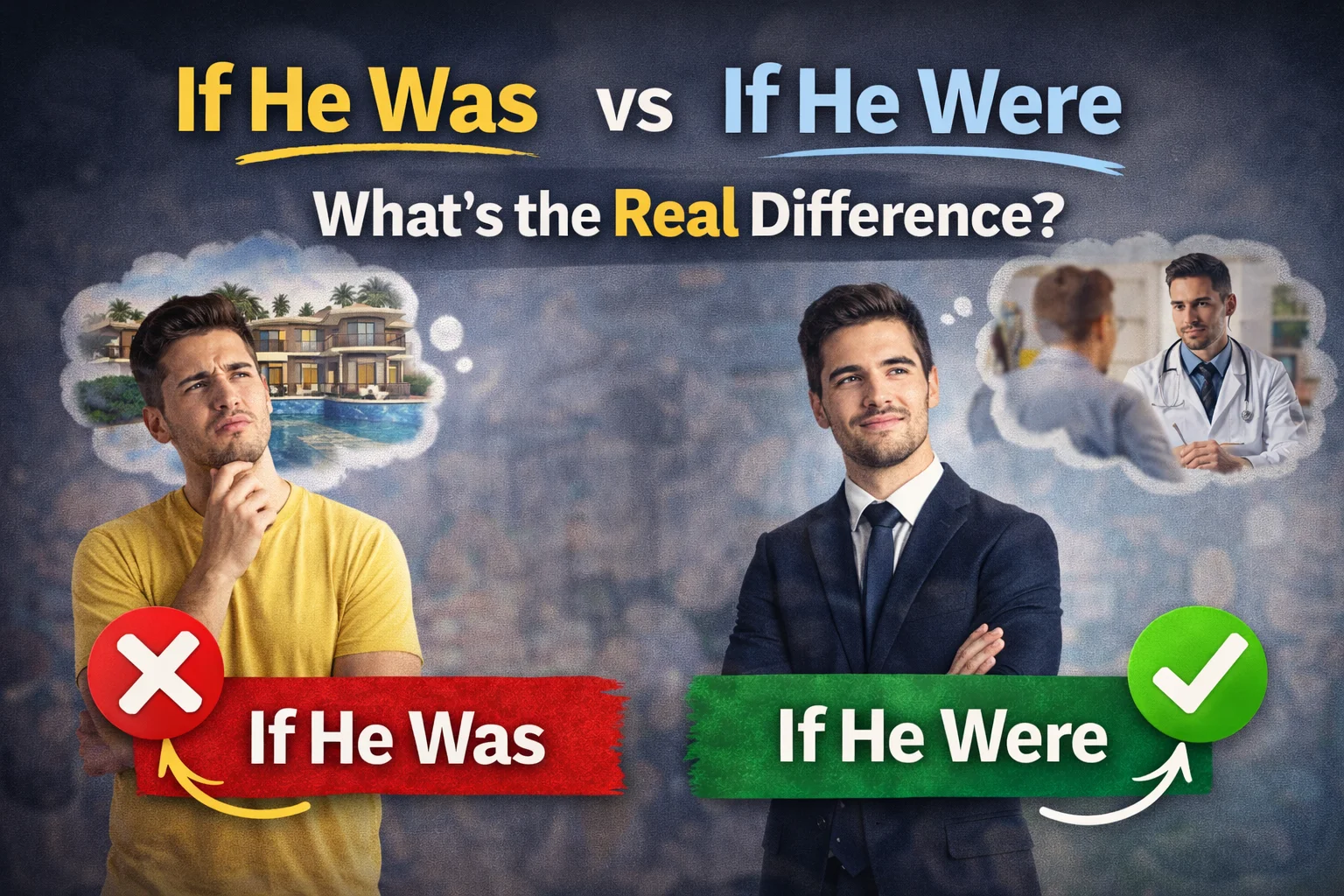
English grammar can feel confusing at times. Many learners struggle with small differences between words. One common example is “If He Was or If He Were.” Both phrases look similar. Both use the verb to be. Yet they do not mean exactly the same thing.
Understanding If He Was or If He Were becomes easier when you know how English handles real and unreal situations. Sometimes we talk about things that actually happened. Other times we imagine things that are not real. The choice between was and were depends on that difference.
Many writers, students, and even native speakers mix them up. But the rule is simpler than it seems. Once you understand it, you can use both forms with confidence.
In this guide, we will break everything down in a simple way. You will learn the grammar rule, real-life examples, and common mistakes. By the end, you will clearly understand If He Was or If He Were and know exactly when to use each one.
Why People Confuse “If He Was or If He Were”
Many English learners feel unsure about If He Was or If He Were. The confusion comes from how the verb to be works in English grammar. In normal sentences, we say he was. That sounds natural.
For example:
- He was late yesterday.
- He was very tired.
- He was at the meeting.
Because of this, many people assume “if he was” is always correct. But English grammar has a special structure called the subjunctive mood. This structure is used when we talk about imaginary or unlikely situations.
That is where “if he were” appears.
For instance:
- If he were here, he could help us.
- If he were taller, he could reach the shelf.
These sentences describe something that is not real right now. The person is not here. The person is not taller.
So the confusion happens because both forms exist. The difference depends on whether the situation is real or imaginary.
Understanding the Subjunctive Mood
To truly understand If He Was or If He Were, you need to know about the subjunctive mood. Do not worry. The concept sounds complex, but the idea is simple.
The subjunctive mood is used for:
- imaginary situations
- wishes
- unlikely events
- hypothetical ideas
When we use the subjunctive mood, the verb form changes. Instead of was, we often use were.
Example:
- If I were rich, I would travel the world.
The speaker is not rich. It is just imagination.
Now compare that with a real situation:
- If I was rude yesterday, I apologize.
This sentence talks about a real possibility.
That is the key idea behind If He Was or If He Were. One refers to reality. The other refers to imagination.
When to Use “If He Was”
Use “if he was” when you are talking about something that might actually be true. The sentence refers to a real situation in the past.
Here are some examples:
- If he was at the meeting, he heard the news.
- If he was sick yesterday, that explains his absence.
- If he was the person who called, we should respond.
In these sentences, the speaker is unsure. But the situation is possible. The person may really have been at the meeting or sick.
This form is common in everyday English. Native speakers often use it naturally when discussing facts or real events.
So remember this simple rule:
Use “if he was” for real or possible situations.
When to Use “If He Were”
Use “if he were” when talking about imaginary or unreal situations. These sentences describe things that are not true right now.
Examples include:
- If he were here, he could solve the problem.
- If he were taller, he could play basketball.
- If he were the manager, things would change.
In each example, the situation is not real. The person is not here. The person is not the manager. The speaker is simply imagining a different reality.
This structure often appears in conditional sentences. These sentences use words like would, could, or might.
For example:
- If he were here, we would start the meeting.
That pattern helps you recognize the correct usage.
A Simple Trick to Remember the Rule
Grammar rules can feel overwhelming. But there is an easy trick for remembering If He Was or If He Were.
Ask yourself one question:
Is the situation real or imaginary?
If the situation is real or possible, use was.
Example:
- If he was late, the traffic caused it.
If the situation is imaginary or unlikely, use were.
Example:
- If he were a superhero, he would save the city.
This quick test works in most situations. It helps writers and learners avoid mistakes.
Examples of “If He Was” in Sentences
Seeing examples helps make grammar clearer. Here are several sentences that use if he was correctly.
- If he was at home, he probably watched the game.
- If he was responsible for the error, he should apologize.
- If he was the last person there, he locked the door.
- If he was feeling tired, he should rest.
Each sentence refers to something that could be true. The speaker is unsure but considers it possible.
In normal conversation, this form appears often. It is common in casual English and storytelling.
Understanding this usage helps you confidently use If He Was or If He Were in real communication.
Examples of “If He Were” in Sentences
Now let’s look at examples using if he were. These sentences describe situations that are imaginary or unlikely.
Examples include:
- If he were the president, he would change the law.
- If he were here right now, he would help us.
- If he were younger, he could join the team.
- If he were my brother, I would support him.
In every case, the speaker imagines a different reality.
This structure is very common in second conditional sentences in English grammar. These sentences talk about hypothetical situations.
Recognizing this pattern makes the difference in If He Was or If He Were much easier to understand.
Common Mistakes People Make
Even experienced writers sometimes mix up If He Was or If He Were. One common mistake is using was in imaginary situations.
For example:
❌ If he was here, he would help us.
✔ If he were here, he would help us.
The first sentence sounds natural in casual speech. However, traditional grammar prefers were in hypothetical situations.
Another mistake happens in the opposite direction.
❌ If he were at the meeting yesterday, he heard everything.
✔ If he was at the meeting yesterday, he heard everything.
The second sentence works better because it refers to a real past possibility.
Avoiding these errors helps your writing sound clearer and more professional.
“If I Were You” and Similar Expressions
One famous example of the subjunctive mood is the phrase “If I were you.”
This expression is very common in English advice.
Examples include:
- If I were you, I would accept the offer.
- If I were you, I would study more.
- If I were you, I would apologize.
Notice that we say “were”, not was. That is because the speaker is imagining being another person.
The same logic applies to If He Was or If He Were. When the situation is imaginary, were is the correct choice.
Understanding this common phrase can help reinforce the grammar rule.
How Native Speakers Use These Forms Today
Modern English is changing. In casual speech, many native speakers use “if he was” even in hypothetical sentences.
For example:
- If he was here, he would help us.
This sentence may sound normal in everyday conversation. However, formal grammar still prefers “if he were.”
In academic writing, professional communication, and careful speech, were remains the correct choice for imaginary situations.
So it helps to know both styles.
Using If He Was or If He Were correctly shows strong grammar skills and improves clarity in writing.
Why This Grammar Rule Still Matters
Some people wonder if this rule still matters today. After all, many people understand both forms.
The truth is that grammar rules still play an important role in clear communication.
Knowing the difference between If He Was or If He Were helps you:
- write more accurately
- sound more professional
- avoid confusion
- understand formal English
For students, writers, bloggers, and professionals, mastering these small grammar details builds credibility.
It also improves the overall quality of your English.
Quick Comparison Table
| Situation | Correct Phrase | Example |
|---|---|---|
| Real or possible past event | If he was | If he was late, traffic caused it |
| Imaginary situation | If he were | If he were here, he would help |
| Hypothetical condition | If he were | If he were taller, he could play |
| Uncertain past possibility | If he was | If he was the caller, we should reply |
This table provides a quick reminder of the difference between If He Was or If He Were.
Frequently Asked Questions
1. Is “If he was” grammatically correct?
Yes, if he was is correct when talking about a real or possible situation in the past. For example: If he was at the party, he saw everything.
2. When should I use “If he were”?
Use if he were for imaginary or hypothetical situations. Example: If he were here, he would help us.
3. Why do we say “If I were you”?
The phrase If I were you uses the subjunctive mood. It describes an imaginary situation where someone becomes another person.
4. Do native speakers always follow this rule?
Not always. In casual speech, many people say if he was. However, formal English still prefers if he were in hypothetical sentences.
5. Is “If he was here” wrong?
It depends on context. If the sentence talks about a real possibility in the past, it is correct. If the situation is imaginary, if he were here is better.
6. Is the subjunctive mood still important?
Yes. It remains important in formal writing, education, and professional communication.
Conclusion
Understanding If He Was or If He Were becomes simple once you know the key difference. The choice depends on whether the situation is real or imaginary.
Use “if he was” when discussing something that may actually have happened. Use “if he were” when imagining a different reality.
Although modern speech sometimes mixes the two forms, traditional grammar still follows this rule. Learning it helps improve your writing and communication skills.
The next time you hesitate between If He Was or If He Were, just ask yourself one question:
Is the situation real or imaginary?
That simple test will guide you to the correct choice every time.