Introduction
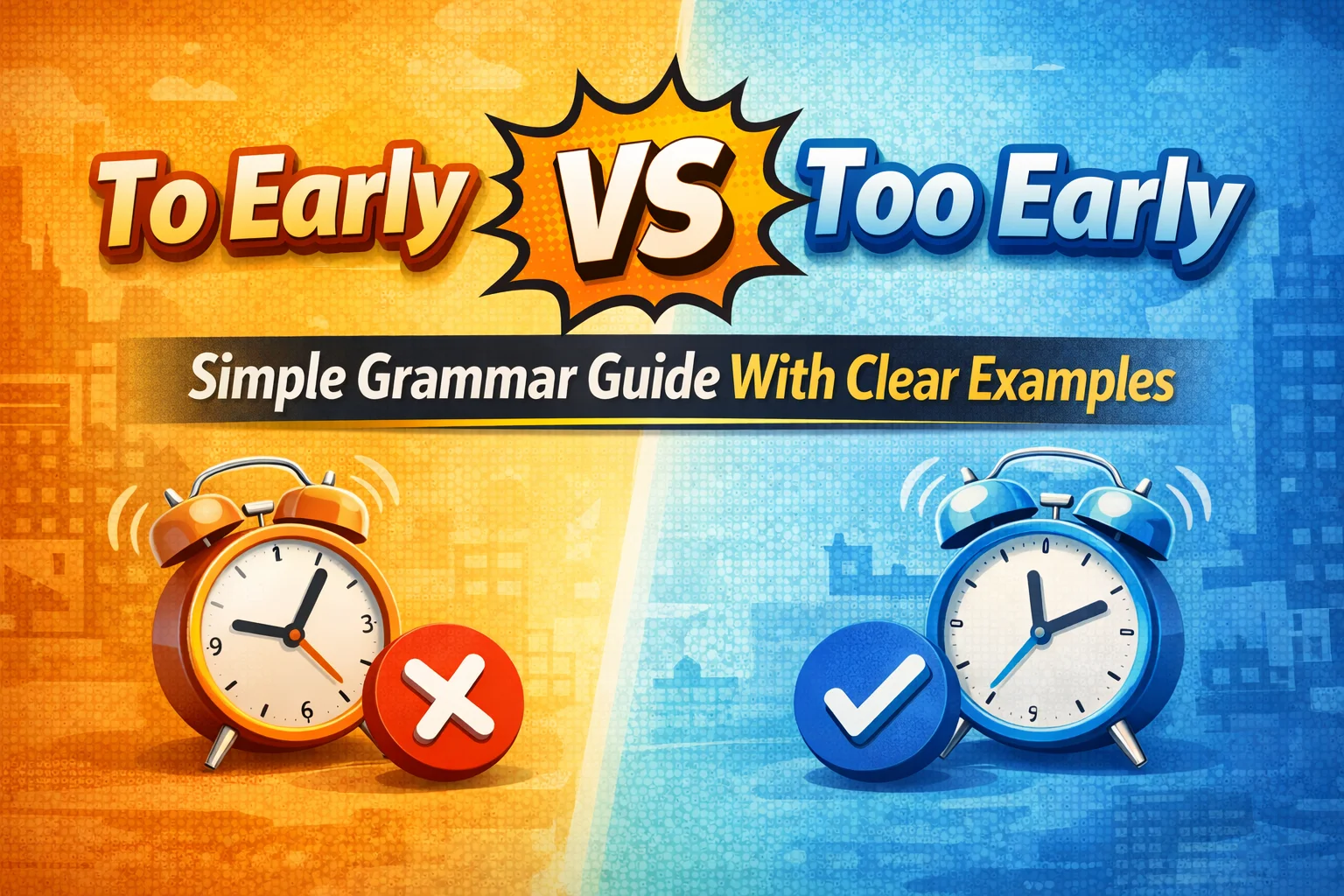
Many people feel confused when they see the phrases to early and too early. At first glance, both look similar. But in correct English grammar, only one of them is right in most situations. That correct form is too early.
Small grammar mistakes can change how readers see your writing. If you write blog posts, emails, or social media content, clear grammar helps you look more professional. It also makes your message easier to understand.
This guide explains the difference between To Early vs Too Early in the simplest way possible. You will learn when to use the correct phrase and why the other one is usually wrong. We will also look at examples, simple rules, and easy tips to remember the difference.
Even if English is not your first language, do not worry. The explanations are short, clear, and friendly. By the end of this article, you will feel confident about using too early correctly in everyday writing and conversation.
Understanding the Phrase: To Early vs Too Early
When people compare To Early vs Too Early, they are usually trying to understand which phrase is grammatically correct.
The answer is simple: “Too early” is the correct phrase in almost all situations.
The word too means more than needed, excessively, or more than expected. When we say something is too early, it means the time is earlier than it should be.
Example:
- It is too early to start the meeting.
- She arrived too early for the interview.
- The store opened too early today.
On the other hand, to early is usually incorrect because the word to is normally used before a verb, not an adjective like early.
Example of correct “to”:
- I want to eat.
- She plans to travel tomorrow.
Because early is an adjective or adverb, not a verb, the phrase to early rarely makes sense.
So when choosing between To Early vs Too Early, remember that too early is the correct form in normal writing.
What Does “Too Early” Mean?
The phrase too early means something happens before the right or expected time. It often suggests that the timing is not appropriate.
For example, imagine waking someone at 4 a.m. for a meeting at 9 a.m. Most people would say that is too early.
Examples in daily life:
- It is too early to talk about holiday plans.
- The kids woke up too early today.
- The weather is too early for snow this year.
In each sentence, the phrase shows that the time feels earlier than normal or earlier than needed.
This is why understanding To Early vs Too Early matters. If you write to early, readers may notice the mistake right away. But using too early clearly shows that you understand correct grammar.
Why “To Early” Is Usually Incorrect
Many people accidentally write to early instead of too early. This happens because the words to and too sound exactly the same.
However, their meanings are very different.
The word to is mainly used in three ways:
- As part of an infinitive verb
- As a preposition showing direction
- As part of certain expressions
Examples:
- I want to learn English.
- She walked to the store.
- Give the book to me.
Because early is not a verb, using to early does not follow standard grammar rules.
So in the discussion of To Early vs Too Early, the phrase to early is simply a spelling mistake in most cases.
Writers, students, and bloggers often make this error quickly when typing. The good news is that once you learn the rule, it becomes very easy to avoid.
Simple Rule to Remember the Difference
The easiest way to remember To Early vs Too Early is this rule:
Too = more than needed
If the sentence talks about something excessive or earlier than expected, you should use too.
Example:
- It is too early to leave.
- This coffee is too hot.
- The bag is too heavy.
All these sentences show something more than the desired level.
If you remember this one rule, you will almost always choose the correct phrase between To Early vs Too Early.
Another trick is to check if the sentence still makes sense with the phrase “more than enough.” If it works, then too is correct.
Example:
- It is more than early enough to go home.
That means the correct phrase is too early.
Examples of “Too Early” in Sentences
Looking at real examples helps make grammar rules easier to understand. Let’s explore a few sentences using too early correctly.
Daily conversation examples:
- It is too early to wake the kids.
- We arrived too early for the movie.
- The flowers bloomed too early this spring.
Workplace examples:
- The team announced the project too early.
- It is too early to make that decision.
- The manager thinks the meeting time is too early.
Writing examples:
- Publishing the news too early can cause confusion.
- The author revealed the ending too early in the story.
These examples show how natural too early sounds in everyday English. When discussing To Early vs Too Early, it becomes clear that too early fits smoothly into real sentences.
Common Grammar Mistakes With “Too”
The confusion around To Early vs Too Early is part of a larger grammar problem. Many people mix up the words to, too, and two.
These three words sound the same but have different meanings.
Here is a simple table to explain the difference:
| Word | Meaning | Example |
|---|---|---|
| To | Shows direction or part of a verb | I want to sleep |
| Too | Means more than needed or also | It is too cold |
| Two | The number 2 | I have two books |
Example sentences:
- It is too early to leave.
- I want to leave soon.
- I bought two tickets.
When people accidentally write to early, they are simply choosing the wrong word among these homophones.
Understanding this difference helps avoid mistakes when writing emails, articles, or social posts.
Real-Life Situations Where “Too Early” Is Used
The phrase too early appears often in daily life. You will hear it in conversations, meetings, news reports, and even movies.
Morning routines are a common example.
Someone might say:
- “It is too early to wake up.”
- “Why are you calling me? It is too early!”
Parents often use the phrase when children wake up before sunrise.
Workplaces also use it frequently.
For example:
- A boss might say it is too early to discuss promotions.
- A team leader might feel a report was sent too early without full data.
Seasonal events provide another example.
People sometimes say winter decorations appear too early in stores. Others think holiday music starts too early every year.
These real-life situations show why understanding To Early vs Too Early is useful in everyday communication.
Tips to Avoid the “To Early” Mistake
Even experienced writers sometimes type to early by accident. The good news is that a few simple habits can help prevent this mistake.
First, slow down while proofreading. Small spelling errors are easy to catch when you read your sentence carefully.
Second, remember that too often connects with adjectives like early, late, fast, or slow.
Examples:
- too late
- too fast
- too loud
- too early
Third, use grammar tools or spell checkers. Many writing apps highlight incorrect phrases automatically.
Finally, practice writing short sentences using too early. The more you use it, the more natural it will feel.
These simple steps help writers avoid confusion when choosing between To Early vs Too Early.
Why Correct Grammar Matters in Writing
Some people think small grammar mistakes do not matter. But in many situations, they actually do.
Correct grammar builds trust with readers. When your writing looks clean and accurate, people feel more confident in your message.
For bloggers and website owners, grammar also helps with search engine optimization. Clear writing improves readability and keeps visitors on the page longer.
For students, using correct grammar shows attention to detail. Teachers often notice these small improvements quickly.
Professionals also benefit from strong grammar. Emails, reports, and presentations look more polished when mistakes like to early are avoided.
That is why understanding To Early vs Too Early may seem small, but it improves the quality of your communication.
How Native Speakers Use “Too Early”
Native English speakers naturally use too early in many conversations. They rarely say to early because it sounds incorrect.
For example:
A friend might say:
“Let’s not leave yet. It’s too early.”
A manager might say:
“It’s too early to release the product.”
A teacher might explain:
“It’s too early to choose your final topic.”
In all these cases, the phrase expresses timing that feels premature.
When learners understand the difference between To Early vs Too Early, their English begins to sound more natural and fluent.
FAQs About To Early vs Too Early
1. Is “to early” ever correct?
In standard grammar, to early is almost always incorrect. The correct phrase is too early when describing time.
2. Why do people confuse to and too?
People confuse them because both words sound the same when spoken. These words are called homophones.
3. What does “too early” mean?
It means something happens earlier than the appropriate or expected time.
Example:
“It is too early to open the store.”
4. How can I remember the correct spelling?
Remember that too has an extra “o.” You can think of it as meaning extra or more than needed.
5. Is “too early” used in formal writing?
Yes. The phrase too early is perfectly acceptable in both formal and informal writing.
6. Can “too early” describe seasons or events?
Yes. People often use it when talking about weather, holidays, or announcements that happen sooner than expected.
Example:
“Christmas decorations appeared too early this year.”
Conclusion
Understanding To Early vs Too Early is simpler than it first appears. The key idea is that too early is the correct phrase in almost every situation.
The word too means more than needed or earlier than expected. When something happens before the right time, we say it is too early.
On the other hand, to early usually appears because of a spelling mistake. Since to is commonly used before verbs, it does not fit correctly with the word early.
Learning this small grammar rule can improve your writing quickly. It helps your sentences look clearer, more professional, and easier to understand.
The next time you write an email, article, or message, remember this simple rule. If the timing feels excessive or premature, the correct phrase is always too early.
And now that you understand the difference between To Early vs Too Early, you can write with greater confidence and clarity.