Many English learners ask the same question: “Should I say anyone has or anyone have?” It seems confusing at first. Both phrases sound similar. But only one is usually correct in a sentence.
Understanding anyone has or anyone have is important for clear communication. This small grammar rule appears in emails, conversations, school work, and business writing. Using the wrong form can make a sentence sound strange.
The good news is that this rule is simple once you see how it works. In this guide, we will explain anyone has or anyone have in a friendly and easy way. You will see examples, simple rules, common mistakes, and tips to remember.
By the end of this article, you will confidently know when to use anyone has and when anyone have might appear in a sentence. Let’s begin.
Understanding the Word “Anyone”
Before solving anyone has or anyone have, we need to understand the word anyone.
The word anyone is an indefinite pronoun. It refers to any person, but we do not know exactly who that person is. It could be one person from a group.
Examples include:
- Anyone can join the meeting.
- Anyone may ask a question.
- Anyone can learn English.
Even though anyone talks about many possible people, grammatically it is treated as singular. This is the key idea to remember.
Because anyone is singular, the verb must also be singular. This rule helps us choose correctly between anyone has or anyone have.
Anyone Has or Anyone Have: The Quick Answer
If you want a quick rule, here it is.
| Subject | Correct Verb | Example |
|---|---|---|
| Anyone | Has | Anyone has the right to speak. |
| Anyone | Have | Usually incorrect |
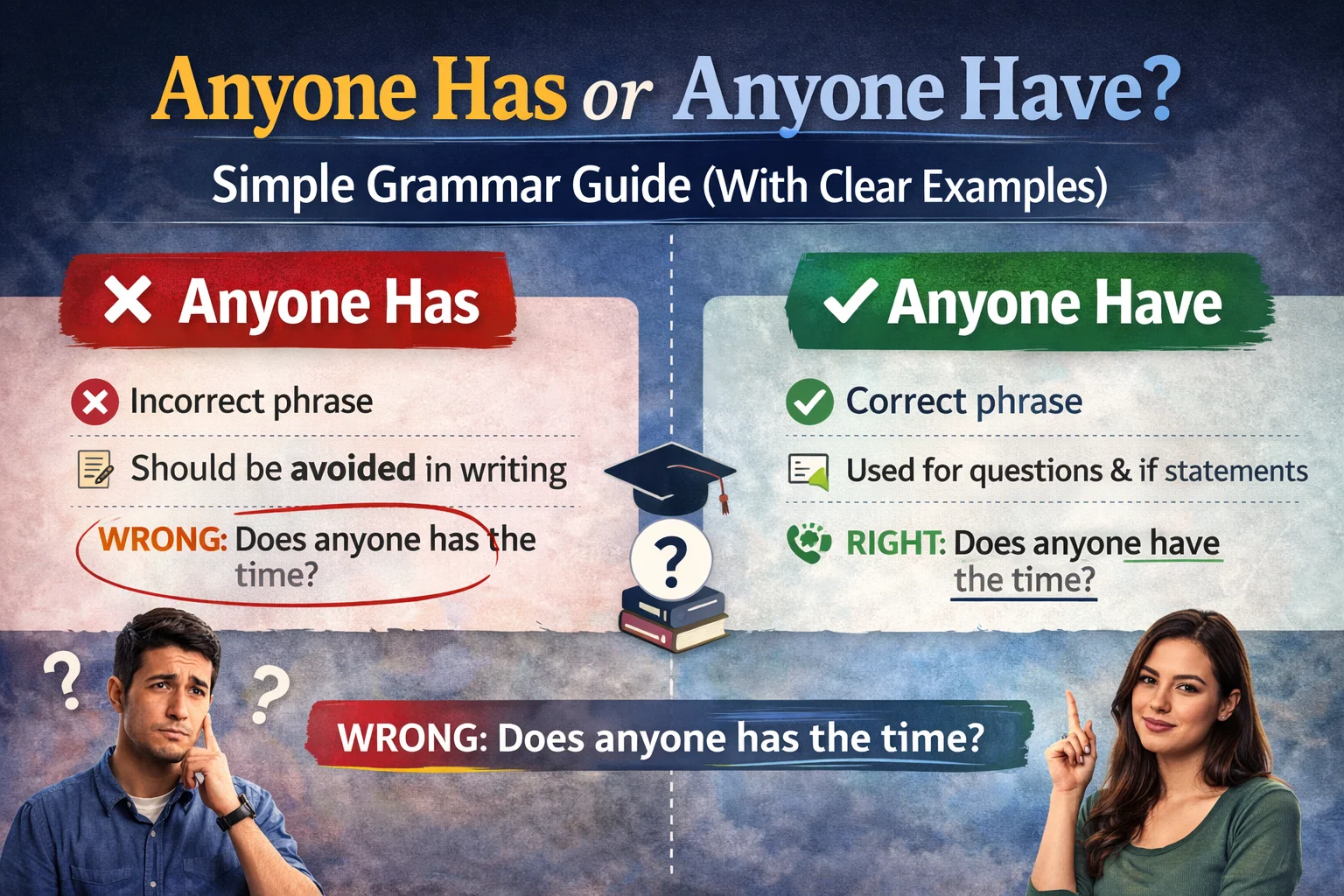
In normal sentences, “anyone has” is correct because anyone is singular.
For example:
- Anyone has access to the file.
- Anyone has the ability to learn.
However, English sometimes uses anyone have in special sentence structures. We will explore those situations later.
For now, remember the main rule: Use “has” with anyone.
Why “Anyone” Uses a Singular Verb
Many learners think anyone should use a plural verb. That happens because the word refers to many possible people.
But grammar rules focus on the form of the word, not the meaning.
Words like anyone, someone, everyone, and no one are all singular pronouns. Because they are singular, they take singular verbs like:
- has
- is
- does
- wants
Here are examples:
- Anyone has the chance to win.
- Someone has my notebook.
- Everyone has a role in the project.
So when deciding between anyone has or anyone have, the singular verb has is correct.
Simple Examples of “Anyone Has”
Let’s look at real sentences using anyone has. These will help you see how the phrase works naturally.
- Anyone has the ability to improve their skills with practice.
- Anyone has access to the public library.
- Anyone has the right to share their opinion politely.
- Anyone has the chance to learn new technology.
- Anyone has the option to leave the meeting early.
Notice something important. Each sentence treats anyone as one person from a group.
Even though the group may be large, the grammar still remains singular. That is why we say anyone has, not anyone have.
When “Anyone Have” May Appear
You might still see anyone have in some sentences. This happens when the verb is part of a question or auxiliary structure.
For example:
- Does anyone have a pen?
- Did anyone have the answer?
- Will anyone have time tomorrow?
In these cases, the helping verb does, did, or will carries the agreement. The main verb returns to its base form have.
Here is a table showing the pattern.
| Sentence Type | Correct Form | Example |
|---|---|---|
| Statement | Anyone has | Anyone has the opportunity. |
| Question | Does anyone have | Does anyone have a question? |
| Past Question | Did anyone have | Did anyone have trouble logging in? |
So when people ask about anyone has or anyone have, they usually confuse statements with question forms.
Common Grammar Mistakes With Anyone
Many learners make the same mistakes when using anyone has or anyone have.
Let’s look at the most common ones.
Mistake 1: Treating Anyone as Plural
Incorrect:
Anyone have the answer.
Correct:
Anyone has the answer.
Mistake 2: Forgetting Auxiliary Verbs
Incorrect:
Anyone have a pen?
Correct:
Does anyone have a pen?
Mistake 3: Mixing Sentence Types
Incorrect:
Anyone have the ability to do this.
Correct:
Anyone has the ability to do this.
Understanding these errors will help you master anyone has or anyone have quickly.
Anyone vs Someone vs Everyone
Words similar to anyone follow the same grammar rule.
| Pronoun | Correct Verb | Example |
|---|---|---|
| Anyone | Has | Anyone has the right to speak. |
| Someone | Has | Someone has my keys. |
| Everyone | Has | Everyone has a role today. |
| No one | Has | No one has the answer yet. |
All these pronouns are singular, so they use has.
This pattern makes it easier to remember the correct form when choosing between anyone has or anyone have.
Real-Life Situations Where This Rule Matters
Grammar rules become easier when we see them in daily life.
Imagine a teacher asking a class:
“Does anyone have a question?”
Here the teacher uses have because does is the helping verb.
Now imagine a statement:
“Anyone has the opportunity to ask questions after class.”
Here we use has because the sentence is a statement.
You will see this pattern in:
- Emails
- Workplace meetings
- School assignments
- Customer service conversations
Using the correct form of anyone has or anyone have helps your writing sound professional and clear.
Tips to Remember the Rule Easily
Here are simple tricks to remember anyone has or anyone have.
1. Think Singular
Always remember: Anyone = one person in grammar.
So the verb should be singular.
2. Look for Helping Verbs
If the sentence includes does, did, or will, the verb becomes have.
Example:
Does anyone have a solution?
3. Replace the Word
Try replacing anyone with one person.
Example:
One person has the answer.
Anyone has the answer.
If the sentence works, you used the correct form.
Why This Grammar Rule Confuses Many People
The confusion around anyone has or anyone have happens because English mixes meaning and grammar.
The word anyone suggests many possible people. That makes learners think it should be plural.
But grammar treats it as one unknown person, not a group.
English contains many words like this. Examples include:
- Everyone
- Someone
- No one
- Each person
They all look plural in meaning but act singular in grammar.
Once you understand this idea, anyone has or anyone have becomes much easier.
Practice Sentences
Try choosing the correct option in each sentence.
- Anyone ___ the ability to learn.
- Does anyone ___ the answer?
- Anyone ___ the right to speak freely.
- Did anyone ___ problems with the website?
Correct answers:
- has
- have
- has
- have
Practice like this helps reinforce the rule behind anyone has or anyone have.
Frequently Asked Questions
1. Is it correct to say anyone have?
Usually no. In a normal statement, anyone have is incorrect. The correct form is anyone has.
Example:
Anyone has the opportunity to participate.
However, anyone have can appear after auxiliary verbs.
Example:
Does anyone have a pen?
2. Why is anyone treated as singular?
The word anyone refers to one unknown person from a group. Even though many people are possible, grammar treats the subject as singular.
That is why anyone has is the correct form.
3. Is “Does anyone has” correct?
No. The correct form is:
Does anyone have the answer?
After does, the main verb returns to its base form.
4. Can anyone be plural in meaning?
Yes. In meaning it refers to many possible people. But grammatically it is always singular.
So we still use has, not have.
5. Is “Anyone have questions?” correct in speech?
In casual speech people sometimes say this. But in formal English the correct sentence is:
Does anyone have questions?
6. Do all indefinite pronouns follow this rule?
Most do. Words like someone, everyone, and no one all use singular verbs.
Example:
Everyone has a ticket.
Final Thoughts on Anyone Has or Anyone Have
The difference between anyone has or anyone have becomes simple once you remember one rule. The word anyone is grammatically singular.
Because of this, statements should use anyone has. For example, “Anyone has the chance to learn something new.”
When a sentence includes a helping verb like does, did, or will, the verb changes to have. That is why we say, “Does anyone have a question?”
This small grammar rule appears often in everyday English. Learning it improves both speaking and writing. It also helps you sound more confident in professional and academic settings.
The next time you wonder about anyone has or anyone have, remember the singular rule and check the sentence structure. With practice, the correct choice will feel natural.
And if you want to improve your grammar even more, keep exploring similar topics like someone vs somebody, everyone vs everybody, and other common English usage questions.