Words can look very similar. Yet they can carry different meanings. This is true for Disloyal vs Unloyal. Many people wonder if both words mean the same thing. Some think they can be used in the same way. Others feel one sounds more natural than the other.
In simple terms, both words talk about a lack of loyalty. But there is an important difference. One word is common in daily English. The other is rare and often avoided.
Understanding Disloyal vs Unloyal helps you write and speak better English. It also helps you choose the right tone in different situations. This guide will explain everything in a clear and simple way.
You will learn definitions, examples, grammar tips, and real-life usage. By the end, you will know exactly when to use each word.
What Does Loyalty Mean?
Before we explore Disloyal vs Unloyal, we need to understand the base word: loyalty.
Loyalty means being faithful, supportive, and committed to someone or something. A loyal person stands by their friends, family, team, or organization. They remain supportive even during difficult times.
For example, a loyal friend helps you when you face problems. A loyal employee supports their company and respects its values. Loyalty also appears in relationships, communities, and even brands.
People admire loyalty because it builds trust. Without loyalty, relationships often break apart.
This is why words that describe a lack of loyalty can carry strong emotions. When someone is called disloyal, it often feels like a serious accusation.
Quick Overview of Disloyal vs Unloyal
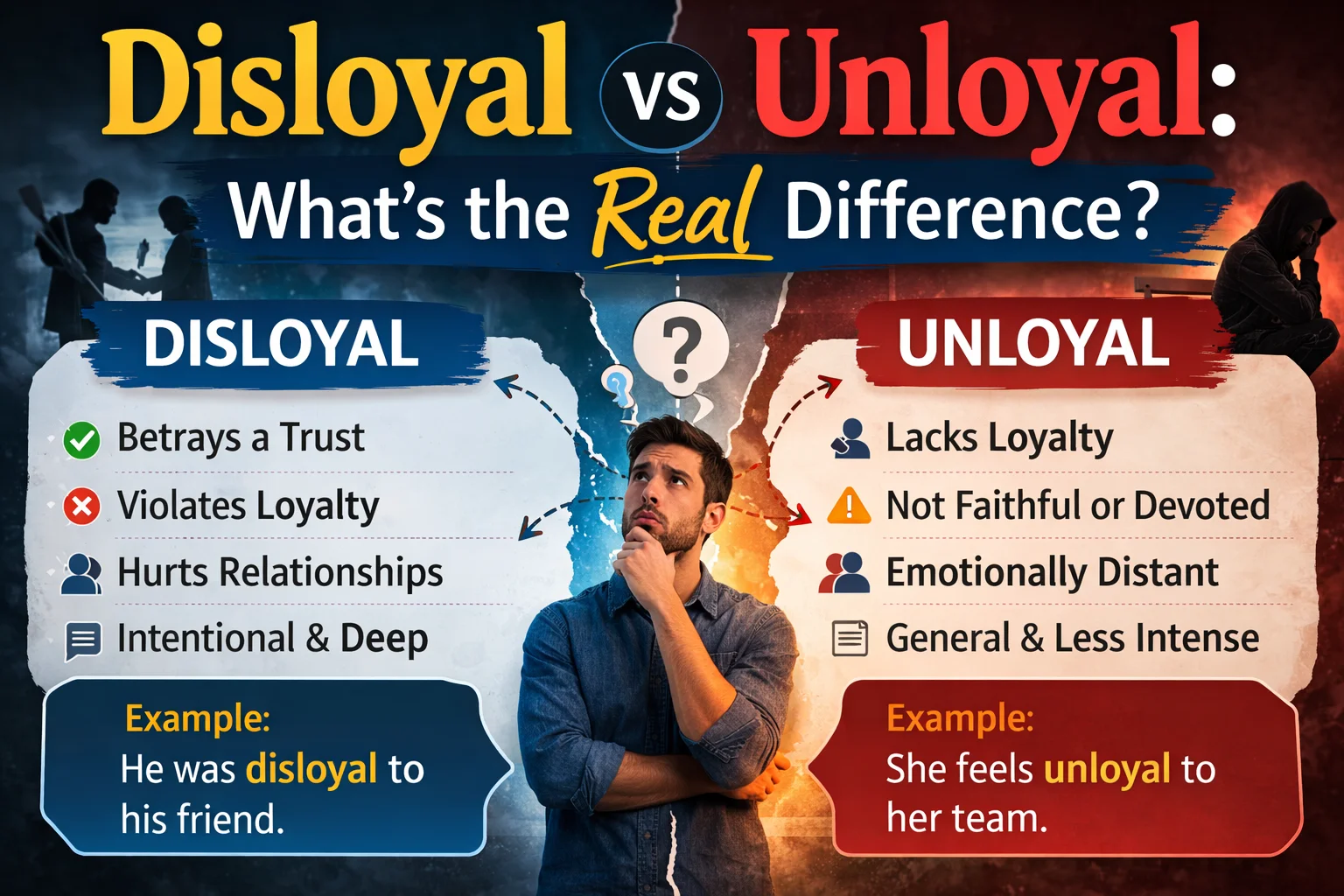
Before diving deeper, here is a simple comparison of Disloyal vs Unloyal.
| Word | Meaning | Usage Frequency | Tone |
|---|---|---|---|
| Disloyal | Not loyal or betraying trust | Very common | Strong and clear |
| Unloyal | Lacking loyalty | Rare | Less natural |
Most English speakers prefer disloyal. It is widely used in writing and conversation. Unloyal, however, appears much less often.
Understanding this difference helps avoid awkward wording.
What Does Disloyal Mean?
The word disloyal describes someone who betrays trust or fails to stay faithful. It often implies active betrayal or harmful behavior.
For example, a disloyal employee might reveal company secrets. A disloyal friend might spread private information.
This word carries a strong negative tone. It suggests that someone broke trust in a serious way.
Examples of disloyal behavior include:
- Sharing confidential information
- Supporting an enemy or rival
- Breaking promises intentionally
- Turning against someone suddenly
Because of its strong meaning, people use disloyal in emotional or serious situations.
In discussions of Disloyal vs Unloyal, this word clearly dominates everyday English.
What Does Unloyal Mean?
The word unloyal technically means “not loyal.” However, it is rarely used in modern English.
Most native speakers avoid it. They prefer the more natural word disloyal.
In some cases, unloyal might appear in older texts or specific dialects. But you will not hear it often in normal conversation.
For example, someone might say:
“He was unloyal to his team.”
Even though this sentence is understandable, many English speakers would say:
“He was disloyal to his team.”
That is why understanding Disloyal vs Unloyal is important. One word simply sounds more natural.
Why Disloyal Is More Common
English often uses the prefix “dis-” to show opposition or negative action.
Examples include:
| Word | Meaning |
|---|---|
| Disagree | Not agree |
| Disapprove | Not approve |
| Disrespect | Lack of respect |
The word disloyal follows this pattern. It feels natural to native speakers.
The prefix “un-” also means “not.” But it does not work well with every word.
For example:
- Unhappy ✔
- Unfair ✔
- Unloyal ❌ (rare)
Because of this pattern, disloyal became the preferred term.
This explains a big part of the Disloyal vs Unloyal debate.
Real-Life Examples of Disloyal Behavior
Understanding real situations makes language easier to remember.
Imagine a workplace scenario. A company trusts an employee with important data. That employee secretly shares it with a competitor. This action is clearly disloyal.
Another example appears in friendships. Suppose a friend reveals your personal secrets. That betrayal shows disloyalty.
Relationships also rely heavily on loyalty. When a partner cheats or lies, people often describe the behavior as disloyal.
These situations show how powerful the word can be. It does not simply mean “not loyal.” It suggests broken trust.
In discussions about Disloyal vs Unloyal, this emotional weight is one reason disloyal dominates.
Situations Where Loyalty Matters Most
Loyalty plays a major role in many areas of life. When loyalty disappears, conflicts often appear.
Here are common situations where loyalty matters.
1. Friendships
Friends depend on trust and honesty. A disloyal friend damages that trust.
2. Relationships
Romantic relationships require strong loyalty. Betrayal often ends the relationship.
3. Workplaces
Employers expect workers to support the company and protect information.
4. Teams and Sports
Team members must support each other. Disloyal actions hurt teamwork.
5. Families
Family loyalty creates stability and support.
Because loyalty affects so many areas of life, words like disloyal carry strong emotional meaning.
Grammar and Word Formation
Understanding word structure helps clarify Disloyal vs Unloyal.
Both words come from the base word loyal. The difference comes from the prefixes.
| Prefix | Meaning | Example |
|---|---|---|
| Dis- | Opposite or negative action | Disloyal |
| Un- | Not or lacking | Unhappy |
Even though both prefixes create negative meanings, English usage decides which sounds natural.
Language evolves through habit and popularity. Over time, disloyal became the standard word.
Common Mistakes When Using These Words
Many English learners make small mistakes when choosing between these words.
One common mistake is using unloyal in formal writing. Because it is rare, it may sound incorrect or awkward.
Another mistake is overusing the word disloyal in casual situations. Sometimes softer phrases work better.
For example:
Instead of saying
“He is disloyal,”
You might say
“He didn’t support the team.”
Choosing the right tone matters.
Understanding Disloyal vs Unloyal helps avoid these errors.
Similar Words Related to Loyalty
English offers several words connected to loyalty and betrayal. Learning them can improve vocabulary.
Here are a few examples.
| Word | Meaning |
|---|---|
| Faithful | Loyal and dependable |
| Devoted | Deeply loyal and committed |
| Betray | Break trust |
| Treacherous | Dangerously disloyal |
| Reliable | Consistently dependable |
Using these alternatives can make writing more interesting.
They also help express different levels of loyalty or betrayal.
How to Choose the Right Word
When deciding between Disloyal vs Unloyal, the safest choice is almost always disloyal.
It is widely accepted and sounds natural.
Here are simple tips:
- Use disloyal in conversations and writing.
- Avoid unloyal unless quoting old texts.
- Choose softer words if the situation is less serious.
For example:
✔ “He was disloyal to the team.”
✔ “She remained loyal to her friends.”
✘ “He was unloyal to the team.” (rare)
Following these tips improves clarity and professionalism.
The Role of Loyalty in Modern Society
Loyalty remains one of the most valued traits in modern society. People respect those who stand by others during difficult moments.
In business, loyalty builds long-term partnerships. Customers often stay with brands they trust.
In personal relationships, loyalty creates emotional security. Friends and family rely on each other for support.
When loyalty breaks, the damage can be significant. Trust becomes difficult to rebuild.
This is why strong words like disloyal carry emotional weight. They describe behavior that harms trust.
Understanding Disloyal vs Unloyal helps communicate these ideas clearly.
FAQs About Disloyal vs Unloyal
1. Is “unloyal” a real word?
Yes, unloyal exists in English. However, it is rarely used. Most speakers prefer disloyal.
2. Which word is correct: disloyal or unloyal?
Both are technically correct. But disloyal is the standard and widely accepted form.
3. Why is disloyal more common?
English commonly uses the prefix dis- to express negative actions. This makes disloyal sound more natural.
4. Can unloyal be used in writing?
It can be used, but it may sound unusual. Writers usually choose disloyal instead.
5. What is the opposite of disloyal?
The opposite is loyal, meaning faithful, supportive, and trustworthy.
6. Is disloyal a strong word?
Yes. It often suggests betrayal or broken trust. Because of this, it carries emotional weight.
Conclusion
The difference between Disloyal vs Unloyal is simple once you understand English usage. Both words describe a lack of loyalty, but they are not equally common.
Disloyal is the clear winner in modern English. It appears frequently in conversations, books, and professional writing. It also carries a stronger meaning, often suggesting betrayal or broken trust.
Unloyal, on the other hand, exists but rarely appears in everyday language. Many speakers avoid it because it sounds unnatural.
When in doubt, choose disloyal. It is clear, natural, and widely accepted.
Language learning becomes easier when you focus on real usage rather than just dictionary definitions.
Now that you understand Disloyal vs Unloyal, you can use the correct word with confidence.