Clear communication is important in every part of life. It matters in work, school, and daily conversations. Sometimes people use short phrases to confirm they understood a message. Two common phrases are Copy That and Roger That. Many people hear these terms in movies, military shows, or aviation stories. But they often wonder about the real difference between them.
The topic Copy That vs Roger That can be confusing at first. Both phrases seem to mean the same thing. They both show that someone heard a message. Yet their origins and meanings are slightly different.
Understanding these phrases can improve your communication skills. It also helps you understand military or aviation language better. In this guide, we will explore the meaning, history, and correct usage of these phrases.
By the end, you will clearly understand Copy That vs Roger That. You will know when to use each phrase and why they exist.
What Does “Copy That” Mean?
The phrase Copy That means you received and understood a message. It is commonly used in radio communication. When someone says “Copy That,” they confirm they heard the information clearly.
This phrase started in military radio systems. Soldiers needed quick and clear responses. Long sentences could slow communication. Short phrases like “Copy That” helped save time.
In simple terms, Copy That means:
- Message received
- Information understood
- No need to repeat
For example, imagine a team leader giving instructions.
Leader: Move to checkpoint three.
Soldier: Copy that.
The response tells the leader the message was received. It does not always mean the action is done yet. It only means the message is understood.
When discussing Copy That vs Roger That, remember that “Copy That” focuses on understanding the message. It does not always confirm action.
What Does “Roger That” Mean?
The phrase Roger That also confirms a message was received. However, it has a slightly different background. The word “Roger” comes from old radio communication alphabets.
In early radio systems, each letter had a code word. The letter R stood for Roger. The letter R meant “Received.”
So when someone said Roger, they meant “I received your message.”
Later, the phrase Roger That became common. It reinforced the idea that the message was heard.
For example:
Pilot: Adjust altitude to 10,000 feet.
Co-pilot: Roger that.
This means the co-pilot heard the instruction. In many situations, it also suggests they will follow the order.
When comparing Copy That vs Roger That, the difference is subtle. Both confirm receipt, but “Roger That” often sounds more like acknowledging an order.
The Origin of “Copy That”
Understanding the origin helps clarify Copy That vs Roger That. The phrase Copy That comes from radio operators who copied messages by writing them down.
In early communication systems, operators listened to radio messages. Then they wrote the message on paper. This process was called copying the message.
So when someone said Copy, it meant they successfully recorded the message.
Over time, people began using Copy That to confirm understanding. The phrase moved from military use into everyday language.
Today, you might hear it in workplaces, gaming, movies, or casual chats. It sounds direct and confident.
Even though its origin is technical, the meaning is simple. It means “I heard and understood you.”
The Origin of “Roger That”
The story behind Roger That is also interesting. During World War II, the phonetic alphabet used the word Roger for the letter R.
At that time, the letter R meant Received in radio communication.
So a radio operator might respond with Roger after hearing a message. This was faster than saying a full sentence.
Later, the NATO phonetic alphabet changed. The letter R became Romeo. But the phrase Roger That remained popular.
Because of its military history, the phrase sounds more formal or tactical.
When exploring Copy That vs Roger That, history shows both phrases came from radio communication systems.
Copy That vs Roger That: The Key Difference
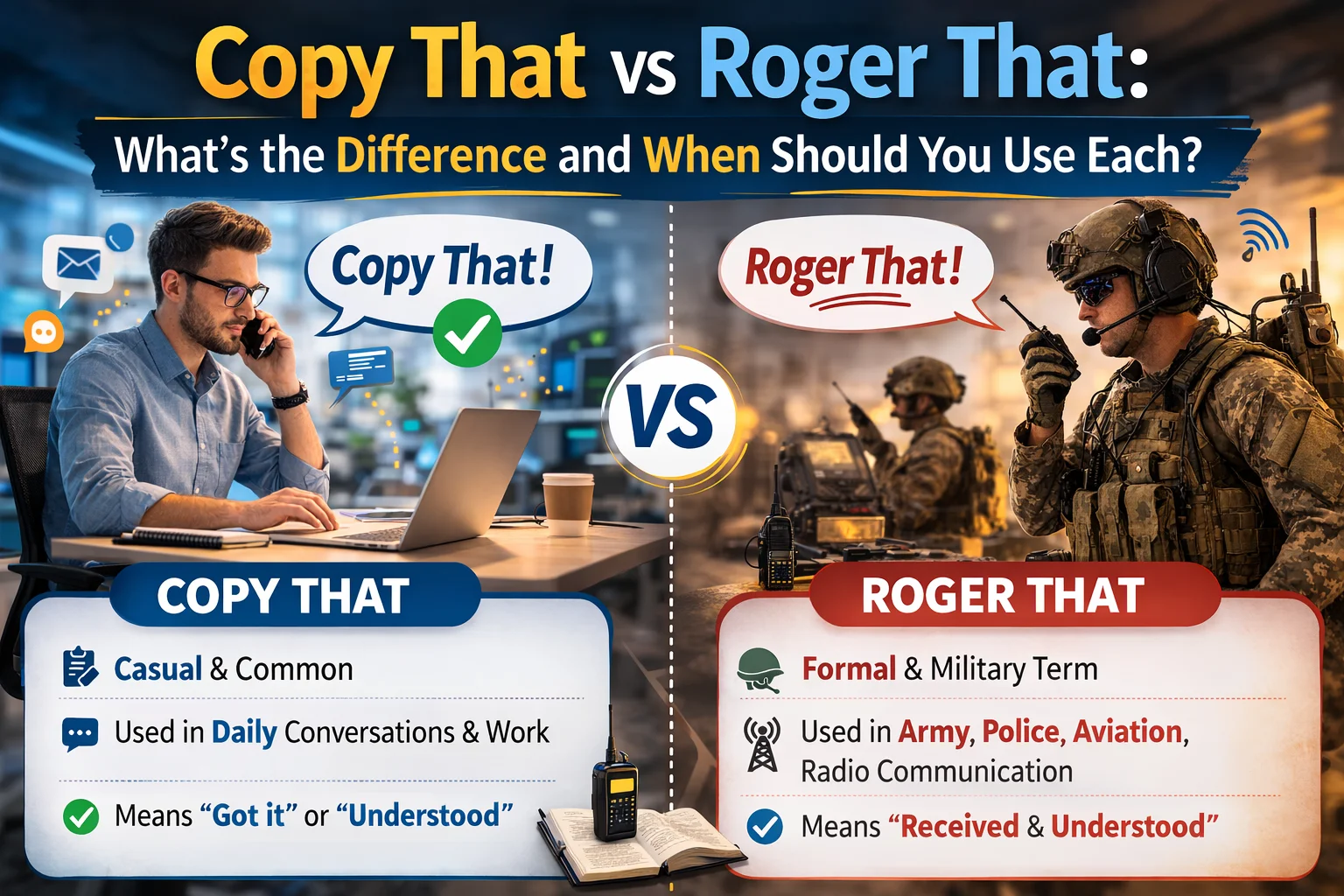
Now let’s look at the real difference between Copy That vs Roger That.
Both phrases confirm that a message was heard. However, they focus on slightly different ideas.
| Phrase | Meaning | Focus |
|---|---|---|
| Copy That | Message understood | Understanding |
| Roger That | Message received | Acknowledgment |
In many real situations, people use them the same way. However, professionals sometimes prefer one phrase depending on context.
For example, pilots often use “Roger” in aviation communication. Military teams might use either phrase.
So the difference in Copy That vs Roger That is small but meaningful.
When Should You Use “Copy That”?
You should use Copy That when you want to confirm understanding. It works best when someone shares information.
Examples include:
- Instructions
- Updates
- Status reports
Example conversation:
Manager: The meeting moved to 3 PM.
Employee: Copy that.
This response confirms the employee understands the change.
In everyday speech, people also use it humorously or casually.
For example:
Friend: Bring snacks tonight.
You: Copy that!
The phrase feels modern and friendly. It works well in many casual situations.
Understanding usage helps clarify Copy That vs Roger That in real life.
When Should You Use “Roger That”?
Roger That is usually used when acknowledging a command or instruction. It sounds more formal than “Copy That.”
You often hear it in:
- Military communication
- Aviation radio
- Emergency services
Example:
Control Tower: Turn left heading 180.
Pilot: Roger that.
The pilot confirms receiving the instruction.
Outside these fields, people sometimes use “Roger That” playfully. It can add humor or a dramatic tone.
For instance:
Parent: Clean your room today.
Teen: Roger that.
So in Copy That vs Roger That, the second phrase often feels more official or military-style.
Examples of Copy That vs Roger That in Daily Life
Many people hear these phrases in movies. But they also appear in normal conversations.
Here are simple examples showing Copy That vs Roger That in everyday situations.
Workplace
Manager: Send the report by noon.
Employee: Copy that.
Team Activity
Coach: Start practice at 6 AM.
Player: Roger that.
Friends Planning
Friend: Meet at the café at five.
You: Copy that.
Both phrases show clear communication. They also add personality to conversations.
Why These Phrases Are Popular in Movies and TV
Movies and TV shows helped make Copy That vs Roger That famous. Action films often include military or aviation scenes.
Characters use short radio phrases to sound professional and intense.
For example, soldiers in movies often say:
“Roger that.”
“Copy that.”
“Over and out.”
These phrases create realism and excitement. Viewers associate them with teamwork and discipline.
Because of media exposure, many people started using these phrases casually.
Today, gamers, office workers, and friends all use them in fun ways.
This popularity keeps the debate around Copy That vs Roger That alive.
Common Mistakes People Make
Even though these phrases are simple, people sometimes misuse them.
One mistake is thinking both phrases mean “I will do it now.”
Actually, they only confirm the message was heard.
Another mistake is mixing them with unrelated radio terms.
For example:
Incorrect: Copy that over and out.
In real radio communication, “over” and “out” have specific meanings.
Understanding these details helps you use Copy That vs Roger That correctly.
Clear communication always improves teamwork and understanding.
Copy That vs Roger That in Aviation and Military
In professional communication, precision matters. Aviation and military teams use standardized phrases.
Pilots often respond with Roger or Roger that to confirm instructions.
Military teams may use Copy or Copy that when receiving mission details.
These systems prevent confusion. They also ensure safety in high-pressure situations.
For example, in aviation, repeating key instructions is often required.
A pilot might respond with both confirmation and repetition.
Example:
Tower: Descend to 5,000 feet.
Pilot: Roger, descending to 5,000.
This system shows how serious communication works in real operations.
The discussion of Copy That vs Roger That becomes important in these fields.
Are These Phrases Still Used Today?
Yes, both phrases are still used today. However, their usage has changed slightly.
Professionals sometimes use more specific radio terms. But Copy That and Roger That remain common.
Outside professional settings, people use them casually.
Gamers use them during team matches. Workers use them in messaging apps. Friends use them jokingly.
Their simple structure makes them easy to remember.
Because of this, the discussion about Copy That vs Roger That continues to interest language learners.
Tips for Using These Phrases Naturally
If you want to use these phrases correctly, keep a few tips in mind.
First, use them when confirming a message. They are not meant for long conversations.
Second, choose the tone based on the situation.
Use Copy That in casual settings.
Use Roger That when acknowledging instructions.
Finally, avoid overusing them. Sometimes a simple “Got it” works better.
The goal of communication is clarity. These phrases simply make responses quick and clear.
Understanding Copy That vs Roger That helps you choose the right phrase.
Frequently Asked Questions (FAQs)
1. What is the main difference between Copy That vs Roger That?
The main difference is focus. Copy That confirms understanding of a message. Roger That confirms the message was received.
2. Are Copy That and Roger That interchangeable?
In many casual situations, yes. People often use them the same way. However, professionals may prefer one depending on context.
3. Is Roger That still used in aviation?
Yes. Pilots still use “Roger” or “Roger that” to acknowledge instructions from air traffic control.
4. Is Copy That formal or casual?
“Copy That” can be both. It started in military communication but is now common in casual speech.
5. Do these phrases mean the task is completed?
No. They only confirm the message was heard. They do not guarantee the action is done.
6. Why do movies use these phrases so often?
Movies use them to create realism. They make characters sound professional and organized.
Conclusion
The discussion about Copy That vs Roger That shows how language evolves. Both phrases started in radio communication systems. They helped soldiers and pilots confirm messages quickly.
Over time, these expressions moved into everyday speech. Today people use them in work, gaming, and casual conversations.
The key difference is simple. Copy That focuses on understanding the message. Roger That focuses on receiving it.
Even though the meanings overlap, knowing the difference improves communication.
Next time someone gives instructions or shares information, you can confidently respond. Whether you say Copy That or Roger That, you will sound clear, confident, and professional.