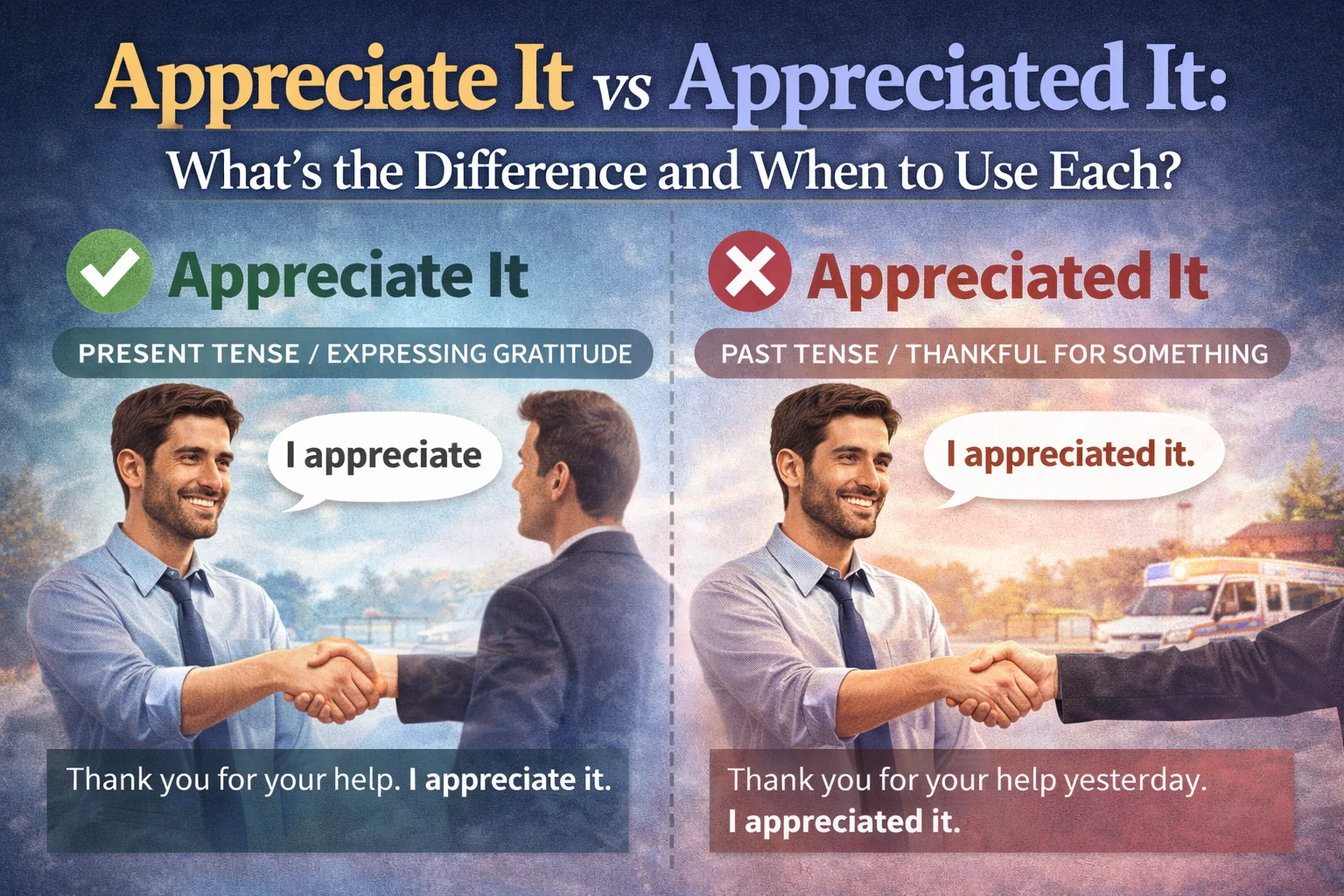
English can sometimes feel tricky. Two phrases may look almost the same but mean slightly different things. One good example is “Appreciate It vs Appreciated It.” Many learners use them in the wrong situation. The difference is simple once you understand tense and context.
Both phrases come from the verb “appreciate.” This word means to feel thankful, grateful, or to value something someone did. But the small change from appreciate to appreciated changes the time of the action. One talks about the present. The other talks about the past.
In this guide, we will break down Appreciate It vs Appreciated It in a very simple way. You will see clear examples, tables, and tips you can use in daily conversations. By the end, you will know exactly when to use each phrase with confidence.
What Does “Appreciate It” Mean?
The phrase “appreciate it” is used in the present tense. It shows that you are thankful right now for something someone did or is doing.
People often use this phrase in casual conversations. It is short, polite, and friendly. Instead of saying a long sentence like “I am grateful for your help,” people simply say “I appreciate it.”
For example, imagine a friend helps you carry your bags. You might say, “Thanks, I appreciate it.” This tells the person you feel thankful at that moment.
Another common use is when asking for help politely. Someone might say, “If you could send the file today, I would appreciate it.” Here, the speaker is politely requesting help.
This phrase works well in emails, text messages, and conversations. It sounds natural and warm. That is why many English speakers use it daily.
What Does “Appreciated It” Mean?
The phrase “appreciated it” is used in the past tense. It shows that you were thankful for something that already happened.
This phrase often appears when someone talks about an earlier experience. For example, you might say, “I appreciated it when you helped me last week.”
Here, the help happened in the past, and your appreciation also belongs to that past moment.
People often use “appreciated it” when reflecting on past kindness or support. It can sound thoughtful and respectful. It also works well in formal writing or storytelling.
For instance, someone might write in an email, “I appreciated your guidance during the project.” This tells the reader that their help in the past was valuable.
Quick Difference Between Appreciate It vs Appreciated It
Understanding Appreciate It vs Appreciated It becomes easier when you compare them side by side.
| Phrase | Tense | Meaning | Example |
|---|---|---|---|
| Appreciate it | Present | Feeling thankful now | “Thanks for helping. I appreciate it.” |
| Appreciated it | Past | Thankful for something earlier | “I appreciated it when you called yesterday.” |
The main difference is time. One talks about gratitude in the present. The other talks about gratitude in the past.
Once you remember this simple rule, using the correct phrase becomes much easier.
Why People Confuse Appreciate It vs Appreciated It
Many learners struggle with Appreciate It vs Appreciated It because both phrases look almost identical. The only change is the “-ed” ending.
This small difference may seem unimportant. But in English grammar, the ending tells us when the action happened.
Another reason for confusion is translation. In some languages, the same phrase works for both past and present gratitude. English, however, uses different verb forms.
Also, in fast conversations, native speakers sometimes shorten sentences. They might say “Appreciate it!” instead of “I appreciate it.” This can make the structure harder to notice.
Once you focus on the time of the action, the confusion usually disappears.
Common Situations Where You Say “I Appreciate It”
The phrase “I appreciate it” is common in everyday life. People use it in many situations where they want to show thanks.
For example, you might use it when someone gives advice. If a coworker explains something helpful, you could say, “I appreciate it.”
It is also common when someone does a favor. Maybe a neighbor waters your plants while you are away. When you return, you might say, “I really appreciate it.”
Another situation is professional communication. In emails, people often write things like, “I appreciate your quick response.” This shows politeness and respect.
Using this phrase helps build positive relationships. It shows kindness and gratitude in a simple way.
Common Situations Where You Say “I Appreciated It”
The phrase “I appreciated it” usually appears when talking about past experiences.
Imagine a teacher helped you prepare for an exam last year. When remembering that time, you might say, “I appreciated your support during that exam.”
Another example could involve customer service. Someone might say, “I appreciated the help your team gave me yesterday.”
This phrase is also common in speeches or written messages. For instance, someone giving a farewell speech might say, “I appreciated all the guidance I received here.”
Using this phrase shows reflection and respect for something that already happened.
Examples of Appreciate It vs Appreciated It in Sentences
Seeing real examples helps make Appreciate It vs Appreciated It much clearer.
Present tense examples (Appreciate It)
- “Thanks for fixing my computer. I appreciate it.”
- “I appreciate it when you listen to me.”
- “If you could send the report today, I would appreciate it.”
- “I really appreciate it, thank you.”
Past tense examples (Appreciated It)
- “I appreciated it when you helped me move.”
- “She appreciated it when her team supported her.”
- “We appreciated it during the difficult time.”
- “He appreciated it when his teacher encouraged him.”
These examples show how the tense changes depending on time.
Polite Requests Using “Would Appreciate It”
One interesting use of this phrase appears in polite requests.
When someone says “I would appreciate it,” they are asking for help in a respectful way. This structure is common in emails and professional settings.
For example:
- “I would appreciate it if you could reply by tomorrow.”
- “We would appreciate it if you reviewed the document.”
This wording sounds gentle and professional. It shows respect for the other person’s time.
That is why it appears often in workplaces, schools, and formal messages.
Tone Differences Between the Two Phrases
While Appreciate It vs Appreciated It mainly differ by tense, they can also create slightly different tones.
“I appreciate it” sounds immediate and warm. It shows your gratitude in the moment. This makes it perfect for conversations.
“I appreciated it,” on the other hand, sounds reflective. It shows you are thinking back on something meaningful.
Because of this, the past tense version sometimes sounds more thoughtful or formal.
Both phrases are correct. The key is simply choosing the one that matches the time of the action.
Simple Grammar Rule to Remember
Here is an easy rule to help you remember Appreciate It vs Appreciated It.
| Time | Correct Phrase |
|---|---|
| Present moment | I appreciate it |
| Something already happened | I appreciated it |
If the help or action is happening now, use appreciate it.
If the help happened before, use appreciated it.
This simple rule solves most confusion instantly.
Common Mistakes to Avoid
Many learners make small mistakes with these phrases. Here are a few common ones.
One mistake is mixing past time with present tense. For example, saying “I appreciate it yesterday” is incorrect. The correct sentence is “I appreciated it yesterday.”
Another mistake is forgetting the subject. In writing, it is better to say “I appreciate it” instead of just “Appreciate it,” unless the situation is casual.
People also sometimes overuse the phrase in formal writing. Instead of repeating it many times, you can use other expressions like “I am grateful” or “Thank you.”
Avoiding these mistakes makes your English sound clearer and more natural.
Helpful Synonyms for “Appreciate”
To make your writing richer, you can sometimes use similar expressions instead of repeating the same phrase.
Here are a few helpful alternatives.
| Phrase | Meaning |
|---|---|
| Thank you | Simple gratitude |
| I’m grateful | Strong appreciation |
| Much obliged | Formal thanks |
| I value it | Shows respect |
| I’m thankful | Expresses gratitude |
Using these alternatives can improve your communication and keep your writing interesting.
FAQs About Appreciate It vs Appreciated It
1. Is “I appreciate it” grammatically correct?
Yes, it is completely correct. It is a common way to express gratitude in the present moment.
2. When should I say “I appreciated it”?
You should use this phrase when talking about something that happened in the past.
3. Can “appreciate it” be used in emails?
Yes. It is widely used in professional emails to show politeness and gratitude.
4. Is “appreciate it” informal?
It is slightly casual but still polite. It works in both friendly and professional conversations.
5. What tense is “appreciated it”?
It is the past tense of the verb “appreciate.”
6. Can both phrases be used in the same conversation?
Yes. For example: “I appreciate your help today. I appreciated your support last week as well.”
Conclusion
Understanding Appreciate It vs Appreciated It is easier than it first appears. Both phrases express gratitude, but they belong to different times.
“I appreciate it” shows thanks in the present moment. It is friendly, natural, and very common in daily conversations.
“I appreciated it” looks back at something that already happened. It reflects gratitude for past actions or support.
Remember this simple rule: present help = appreciate it, past help = appreciated it.
When you keep the timing in mind, choosing the correct phrase becomes easy. With practice, you will use both expressions confidently in conversations, emails, and writing.