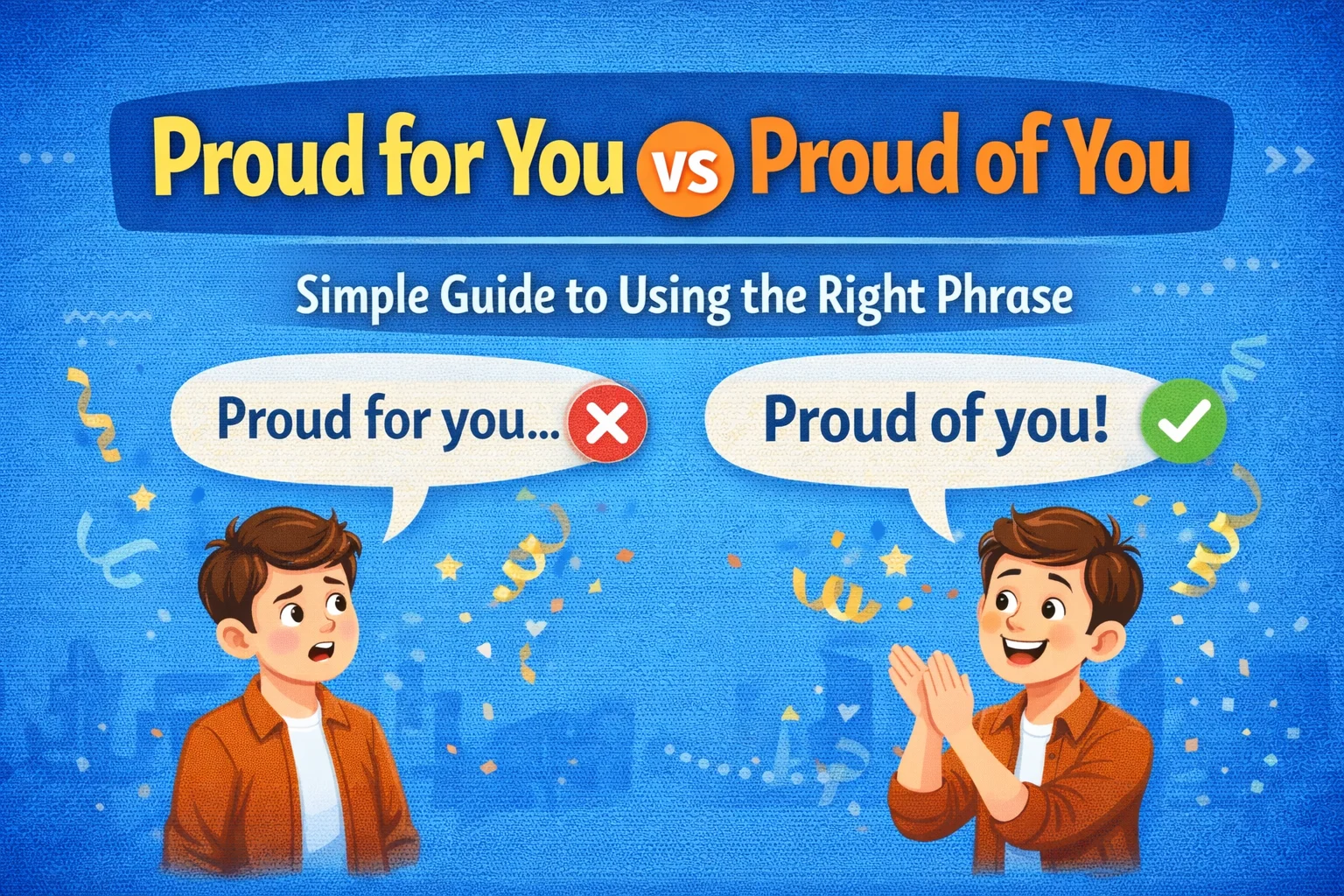
Many people feel confused about Proud for You vs Proud of You. Both phrases look similar. Both show happiness for someone’s success. But in English, only one of them is normally correct. The difference may seem small, yet it matters in writing and speaking.
If you want to speak clear English, this guide will help you. We will explore what each phrase means. We will also look at examples, grammar rules, and real-life situations. By the end, you will feel confident using the correct phrase.
Understanding Proud for You vs Proud of You is helpful for students, writers, and anyone learning English. The good news is that the rule is simple once you see it clearly. Let’s break it down step by step in an easy and friendly way.
Understanding the Phrase “Proud of You”
The phrase “proud of you” is the correct and natural expression in English. People use it when they feel happy about someone’s achievement, effort, or good behavior.
For example, a parent may say, “I am proud of you” after a child finishes school. A teacher may say it when a student does well in a test. The phrase shows admiration and respect.
The key reason this phrase works is grammar. In English, the adjective “proud” is usually followed by the preposition “of.” This structure has been used for many years.
Here are a few examples:
- I am proud of you for working hard.
- Your parents are proud of you.
- We are proud of you for your success.
In all these examples, “proud of you” sounds natural and correct. That is why it is widely used in daily conversations and writing.
What Does “Proud for You” Mean?
When people discuss Proud for You vs Proud of You, they often wonder if “proud for you” is correct. The truth is that it is rarely used in standard English.
“Proud for you” can sound strange to native speakers. The phrase does not follow the normal grammar pattern of the word “proud.”
Sometimes people use it in a casual way online. They may write it in comments or social media posts. However, it is not considered proper English in most situations.
For example, someone might say:
- I’m proud for you.
Although the meaning is understandable, the sentence still feels unusual. Native speakers would normally say:
- I’m proud of you.
So when thinking about Proud for You vs Proud of You, remember that “proud of you” is the standard and trusted form.
Why “Proud of You” Is Grammatically Correct
The difference in Proud for You vs Proud of You comes from English grammar rules. Certain adjectives work with specific prepositions.
The adjective “proud” is almost always followed by “of.” This rule appears in dictionaries and grammar books.
For example:
- proud of someone
- proud of something
- proud of an achievement
These patterns are well established in English. They are used by teachers, writers, and professional speakers.
Because of this rule, “proud for you” does not fit the normal structure. The preposition “for” is usually used for purpose or benefit, not pride.
Understanding this grammar rule makes the debate about Proud for You vs Proud of You much easier. The correct phrase is clear once you know the pattern.
Table: Proud for You vs Proud of You
| Phrase | Correct Usage | Example Sentence | Common Usage |
|---|---|---|---|
| Proud of You | Correct and standard | I am proud of you for graduating. | Very common |
| Proud for You | Rare and unnatural | I’m proud for you. | Not recommended |
This simple table shows the difference clearly. If you want safe and correct English, choose “proud of you.”
When People Might Use “Proud for You”
Even though Proud for You vs Proud of You has a clear answer, you may still see “proud for you” sometimes.
This usually happens in informal places such as:
- Social media comments
- Text messages
- Non-native English writing
People may use it when they want to express happiness for someone. They might think the phrase means “happy for you.”
For example:
- I’m so proud for you and your success.
While the feeling is kind, the grammar still feels awkward. Native speakers would naturally change the sentence to:
- I’m so proud of you and your success.
So even if you see “proud for you” online, it is better to use the correct phrase.
Examples of “Proud of You” in Real Life
Looking at real examples helps make Proud for You vs Proud of You easier to understand. Here are some everyday situations where “proud of you” is commonly used.
A parent might say it when a child learns something new. For example, “I’m proud of you for learning to ride a bike.”
A manager may say it to an employee after a successful project. The manager could say, “We are proud of you for your dedication.”
Friends also use the phrase to support each other. One friend might say, “I’m proud of you for chasing your dreams.”
In each case, the phrase celebrates effort, growth, and achievement. This is why “proud of you” feels warm and encouraging.
Emotional Meaning Behind “Proud of You”
The topic Proud for You vs Proud of You is not only about grammar. It also relates to emotions and relationships.
When someone says “I’m proud of you,” they show admiration. They recognize effort and growth. The phrase tells the other person that their actions matter.
This expression is powerful because it supports confidence. Children who hear “I’m proud of you” often feel encouraged. Adults also feel motivated when they hear these words.
The phrase creates a sense of connection. It shows respect and appreciation for someone’s journey. That is why it appears so often in families, schools, and workplaces.
So beyond grammar, “proud of you” carries deep emotional value.
Common Mistakes People Make
Many learners mix up Proud for You vs Proud of You because English prepositions can be confusing. Some people simply translate phrases from their native language.
For example, in some languages the structure may resemble “proud for you.” When translated directly, it leads to the wrong phrase in English.
Another common mistake happens in quick texting. People may type fast and not think about grammar. As a result, “proud for you” appears online.
However, careful writers and speakers usually stick with the correct version. Remembering one simple rule helps avoid mistakes: “Proud” almost always uses “of.”
When you follow this rule, your English will sound natural and clear.
Tips to Remember the Correct Phrase
Learning Proud for You vs Proud of You becomes easier with simple memory tricks.
One helpful tip is to connect the phrase with achievements. When someone achieves something, you feel proud of them.
Another easy trick is to remember common sentences:
- I’m proud of you.
- We are proud of you.
- She is proud of you.
Because these sentences are so common, your brain quickly learns the correct pattern.
Reading English books and watching movies also helps. You will hear “proud of you” again and again. This natural exposure strengthens your understanding.
Over time, the correct phrase will feel automatic.
Why Correct Grammar Matters
You might wonder why the debate about Proud for You vs Proud of You matters. After all, both phrases seem understandable.
The reason is clarity and professionalism. Correct grammar helps your message sound confident and trustworthy.
In school essays, emails, and professional writing, proper language matters. Using the right phrase shows that you understand English structure.
It also prevents confusion. Readers immediately understand your meaning when you use the standard expression.
So while small mistakes are normal, learning the correct phrase improves communication.
How Native Speakers Use the Phrase
Native speakers rarely think about Proud for You vs Proud of You because the correct phrase feels natural to them.
In everyday life, they simply say:
- I’m proud of you.
- Your family must be proud of you.
- We’re proud of you for trying.
You will hear this phrase in movies, speeches, and interviews. It appears in graduation ceremonies, award shows, and personal conversations.
Because it is so common, using the same phrase helps your English sound more fluent.
Proud of Someone vs Proud for Someone
Another way to understand Proud for You vs Proud of You is by comparing similar sentences.
Consider these examples:
- I’m proud of my sister.
- He is proud of his team.
- They are proud of their country.
In each sentence, the structure remains the same. The adjective “proud” connects with “of.”
If we replace “of” with “for,” the sentences suddenly sound strange. That is why “proud of” remains the correct pattern in English.
FAQs
1. Is “proud for you” grammatically correct?
Not usually. In the discussion of Proud for You vs Proud of You, the correct phrase is “proud of you.” Native speakers prefer this structure.
2. Why do people say “proud of you”?
People say it to show admiration for someone’s effort or achievement. It expresses support and encouragement.
3. Can I use “proud for you” in casual conversation?
Some people use it casually online. However, it is still better to use “proud of you” for correct English.
4. What does “I’m proud of you” mean?
It means the speaker feels happy and impressed by someone’s actions, success, or growth.
5. Is “proud of someone” always correct?
Yes. The phrase “proud of someone” follows the normal grammar pattern in English.
6. How can I remember the correct phrase?
Remember this simple rule: the adjective “proud” almost always goes with “of.”
Conclusion
The difference between Proud for You vs Proud of You may look small, but it is important in English. The correct phrase is “proud of you.” It follows the normal grammar rule and sounds natural to native speakers.
While “proud for you” sometimes appears online, it is not considered standard English. If you want clear and professional communication, using “proud of you” is the safest choice.
Language becomes easier when we understand simple patterns like this one. Once you learn the rule, you will recognize the correct phrase everywhere.
So the next time someone achieves something great, say it with confidence: “I’m proud of you.” It is a small sentence, but it carries a powerful message of support and encouragement.