Introduction
Have you ever heard someone say “See you this Friday” and wondered which day they meant? Maybe you also heard “Let’s meet next Friday.” These phrases sound simple, but they often confuse people. Many people ask about Next Friday vs This Friday because the meaning can change depending on the situation.
In daily conversations, small words like this and next can create big misunderstandings. Imagine planning a meeting, a trip, or an event. If people misunderstand the day, plans can fall apart quickly. That is why it is important to understand how these phrases work.
In this simple guide, we will clearly explain Next Friday vs This Friday. You will learn the meaning, the differences, and how to use them correctly. We will also look at examples from everyday life so the idea becomes very clear. By the end, you will feel confident using these phrases in conversations, emails, and messages.
Why People Get Confused About Next Friday vs This Friday
Many people struggle with Next Friday vs This Friday because English time expressions can be tricky. Words like this, next, and coming may change meaning based on the current day.
For example, imagine today is Monday. If someone says “this Friday,” they usually mean the Friday coming in the same week. But if they say “next Friday,” they often mean the Friday of the following week. However, not everyone follows this rule.
Some people use next Friday to mean the very next Friday on the calendar. Others use it to mean the Friday after the upcoming one. This difference in understanding creates confusion.
Cultural differences also play a role. In some regions, people use next Friday and this Friday differently. That is why even native English speakers sometimes ask for clarification.
Understanding Next Friday vs This Friday helps you avoid misunderstandings. It also makes communication smoother in work meetings, travel plans, and social events.
What Does “This Friday” Mean?
The phrase “this Friday” usually refers to the closest upcoming Friday. It means the Friday that comes next in the current week.
For example, imagine today is Tuesday. If someone says “We have a meeting this Friday,” they mean the Friday that is only a few days away.
Here are some simple examples:
- “The exam is this Friday.”
- “Let’s go out this Friday night.”
- “The report is due this Friday.”
In all these cases, this Friday points to the immediate upcoming Friday. It is the nearest Friday in time.
People often use this phrase when talking about plans happening soon. It gives a sense that the event is close.
Understanding this meaning helps reduce confusion when discussing Next Friday vs This Friday. When you hear this Friday, think about the nearest Friday approaching in the same week.
What Does “Next Friday” Mean?
The phrase “next Friday” usually refers to the Friday after this coming Friday. In simple words, it means the Friday of the following week.
Let’s imagine today is Monday. If someone says “We will meet next Friday,” many people understand it as the Friday next week, not the one a few days away.
Here are some examples:
- “My interview is next Friday.”
- “We are traveling next Friday morning.”
- “The party will happen next Friday.”
In these examples, next Friday refers to a Friday that is more than a week away.
However, this is where confusion often appears. Some people think next Friday means the very next Friday coming soon. Because of this, people sometimes ask, “Do you mean this Friday or the Friday after?”
This confusion is the main reason people search for Next Friday vs This Friday explanations.
The Simple Difference Between Next Friday vs This Friday
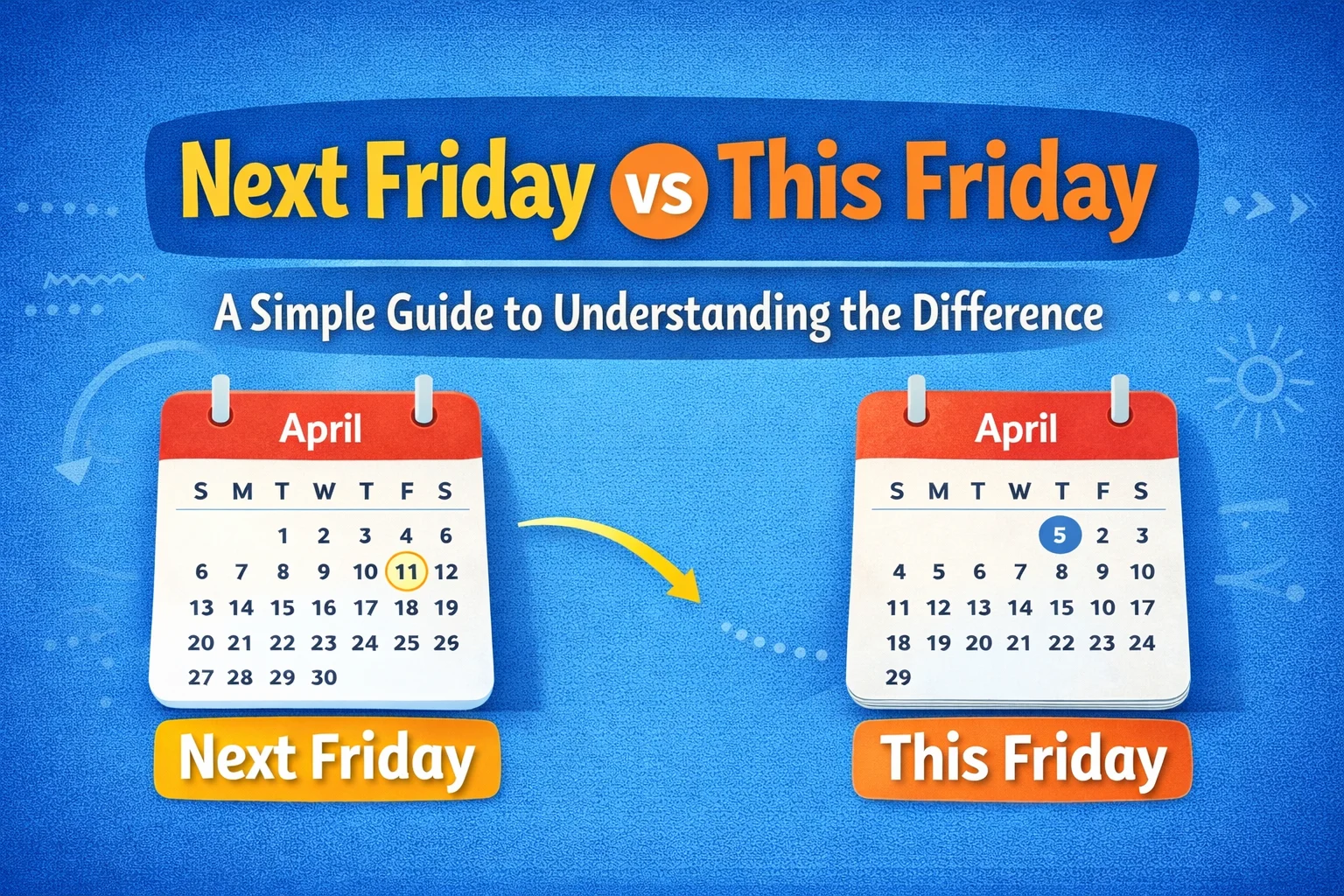
The easiest way to understand Next Friday vs This Friday is to think about time distance.
This Friday
- Refers to the closest upcoming Friday
- Usually happens within the same week
Next Friday
- Refers to the Friday of the following week
- Happens after the upcoming Friday
Here is a simple example.
Imagine today is Wednesday.
- This Friday → two days away
- Next Friday → nine days away
This small change in wording can change the date by an entire week.
That is why clarity matters. In professional settings, many people prefer giving the exact date instead of saying next Friday.
Understanding the difference in Next Friday vs This Friday helps avoid mistakes when planning meetings, events, or deadlines.
Real-Life Examples of Next Friday vs This Friday
Let’s look at everyday examples to make Next Friday vs This Friday easier to understand.
Imagine today is Monday, March 1.
Example 1
“Let’s meet this Friday.”
Meaning: Friday, March 5.
Example 2
“Let’s meet next Friday.”
Meaning: Friday, March 12.
Now imagine today is Friday morning.
If someone says “this Friday,” they usually mean today. But if they say “next Friday,” they mean the Friday of the following week.
In workplaces, people often confirm the date.
For example:
“Do you mean this Friday, March 5, or next Friday, March 12?”
Using clear communication reduces confusion around Next Friday vs This Friday and keeps plans organized.
When to Use “This Friday”
You should use this Friday when talking about an event happening very soon.
It works best when the Friday you mean is part of the current week. This phrase makes your message feel immediate and direct.
Here are some situations where this Friday works well:
- Work meetings
- School deadlines
- Weekend plans
- Short-term appointments
Example sentences:
- “The project presentation is this Friday.”
- “We are going to the beach this Friday.”
- “Submit your assignment this Friday.”
Using this Friday helps people understand the event is happening soon. It reduces confusion when compared with next Friday.
In conversations about Next Friday vs This Friday, remember that this Friday usually means the closest Friday coming up.
When to Use “Next Friday”
Use next Friday when talking about plans that happen after the upcoming Friday.
This phrase is helpful when you want to talk about something happening next week.
For example:
- “Our team meeting is next Friday.”
- “The concert will happen next Friday night.”
- “We are leaving for vacation next Friday.”
In these cases, the event is not happening this week. It is happening the following week.
However, because people interpret next Friday differently, it is always smart to add a date when possible.
For example:
“Our meeting is next Friday, April 12.”
This removes confusion about Next Friday vs This Friday and keeps communication clear.
Tips to Avoid Confusion
Because Next Friday vs This Friday can confuse people, it is helpful to use clear communication.
Here are some simple tips:
1. Use the full date
Instead of saying “next Friday,” say “Friday, April 12.”
2. Confirm when planning events
Ask, “Do you mean this Friday or next Friday?”
3. Use phrases like “this coming Friday”
This can clarify the meaning.
4. Repeat the date in writing
Emails and messages should include exact dates.
These small steps can prevent mistakes. They also make professional communication more reliable.
Why Clear Time Language Matters
Clear communication about time is very important. Misunderstanding dates can cause missed meetings, late work, and canceled plans.
In business environments, a simple mix-up between Next Friday vs This Friday could delay projects or cause scheduling problems.
In personal life, the confusion might be smaller but still frustrating. Imagine showing up for dinner a week early or late.
Using precise language builds trust. It shows that you respect other people’s time.
Many professionals recommend using exact dates whenever possible. This simple habit avoids confusion and keeps everyone on the same schedule.
Understanding Next Friday vs This Friday is a small skill, but it improves everyday communication.
Other Similar Time Phrases
English includes many phrases similar to Next Friday vs This Friday. These expressions can also confuse learners.
Here are some examples:
This weekend
Refers to the upcoming weekend.
Next week
Usually means the week after the current one.
This Monday
Refers to the Monday of the current week.
Next Monday
Often means the Monday of the following week.
Because these phrases work in similar ways, the same confusion can happen. That is why people sometimes ask for clarification.
Learning how these expressions work helps you understand everyday English conversations more easily.
How Native Speakers Handle the Confusion
Even native speakers sometimes debate Next Friday vs This Friday. The interpretation can change depending on region or personal habit.
In professional environments, many people avoid this confusion by using specific dates.
For example, instead of saying:
“Let’s meet next Friday.”
They say:
“Let’s meet Friday, June 14.”
Some workplaces also confirm schedules in writing. Emails or calendars often include the full date and time.
This approach ensures everyone understands the plan correctly. It also reduces misunderstandings related to Next Friday vs This Friday.
Frequently Asked Questions (FAQs)
1. What is the difference between Next Friday vs This Friday?
This Friday usually means the nearest upcoming Friday.
Next Friday usually means the Friday of the following week.
2. Does next Friday mean tomorrow?
No. Next Friday usually refers to the Friday after the upcoming one. However, some people interpret it differently.
3. Why do people confuse Next Friday vs This Friday?
The confusion happens because people interpret next differently. Some think it means the immediate next day, while others think it means the following week.
4. How can I avoid confusion when talking about Friday?
The best way is to mention the exact date. For example, say “Friday, April 12.”
5. Is this Friday always the closest Friday?
Yes, in most cases this Friday means the closest upcoming Friday.
6. Do native English speakers also confuse these phrases?
Yes. Even native speakers sometimes ask for clarification when hearing Next Friday vs This Friday.
Conclusion
Understanding Next Friday vs This Friday may seem simple, but it can easily confuse people. Small words like this and next can change the meaning of a sentence.
In most cases, this Friday refers to the nearest upcoming Friday. On the other hand, next Friday usually means the Friday of the following week. However, because people interpret these phrases differently, confusion can still happen.
The best way to avoid misunderstandings is to use clear communication. Adding the exact date or confirming the day can prevent mistakes.
Once you understand the difference between Next Friday vs This Friday, planning meetings, events, and appointments becomes much easier.
Clear language saves time, avoids frustration, and keeps everyone on the same page.