Introduction
Many English words look very similar but have very different meanings. One common example is Impatient vs Inpatient. These two words differ by only one letter, yet they mean completely different things. Because they sound similar, people often mix them up when speaking or writing.
If you have ever typed one word but meant the other, you are not alone. Even experienced writers sometimes confuse these terms. The good news is that once you understand the meaning and usage of each word, the difference becomes very easy.
In this simple guide, we will clearly explain Impatient vs Inpatient using easy language and real-life examples. You will learn the meanings, spelling differences, and how to use each word correctly in sentences. By the end, you will feel confident using both words in daily communication, writing, and conversations.
Understanding the Confusion Between Impatient vs Inpatient
At first glance, Impatient vs Inpatient look almost identical. The only difference is the letter “m” in impatient. This small spelling change creates a completely different meaning.
Many people confuse these words because:
- They sound somewhat similar when spoken quickly.
- Their spellings look almost the same.
- Both are commonly used in everyday language.
However, their meanings are not related at all.
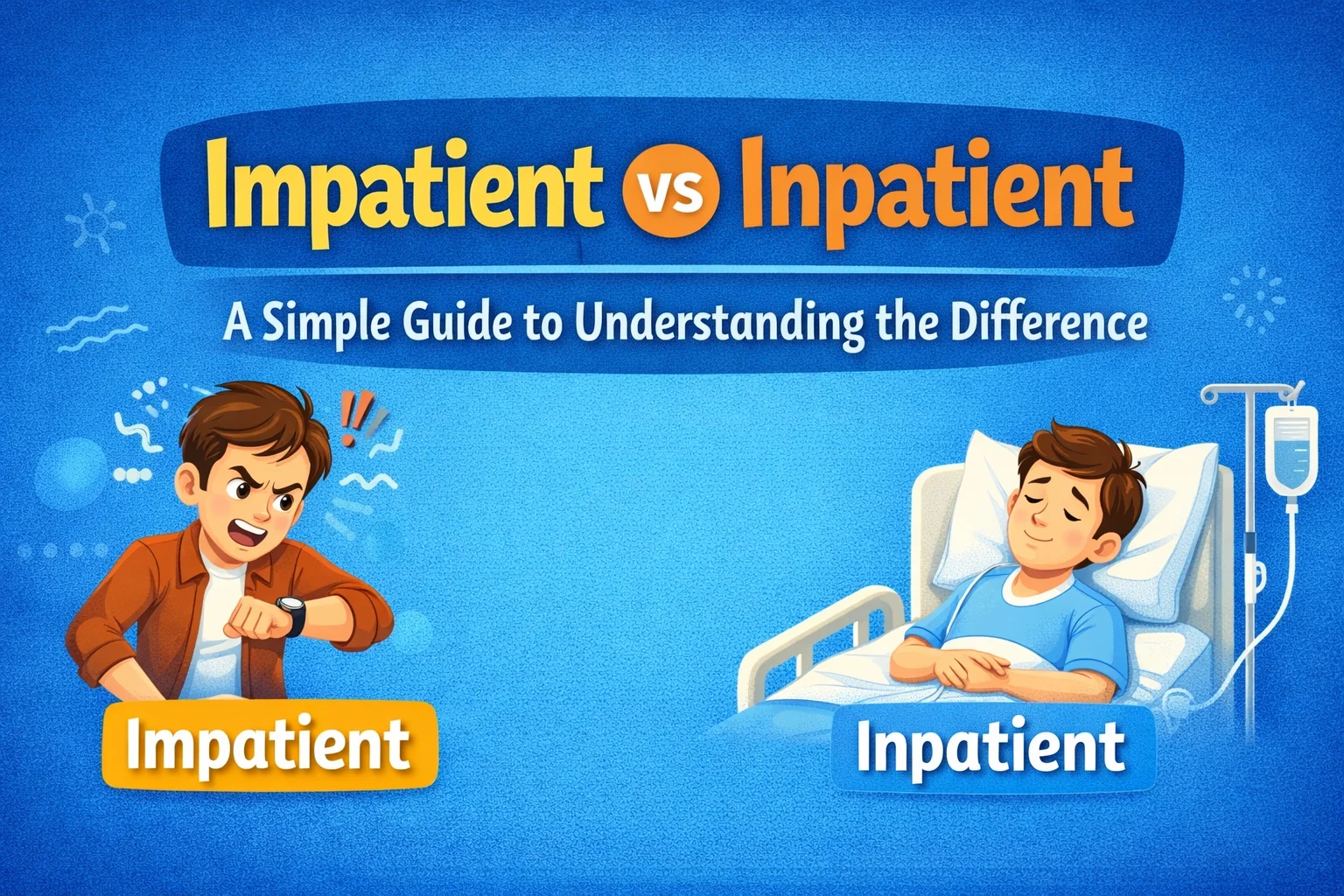
Impatient describes a feeling or behavior. It means someone cannot wait calmly.
Inpatient, on the other hand, is a medical term. It refers to a patient who stays in a hospital for treatment.
Understanding this difference is important. Using the wrong word can completely change the meaning of your sentence. For example:
- She became impatient waiting for the bus.
- He is an inpatient at the hospital.
Both sentences talk about different situations.
What Does Impatient Mean?
The word impatient describes a person who does not want to wait. It shows frustration, restlessness, or a strong desire for something to happen quickly.
People feel impatient when they are stuck in long lines, waiting for results, or dealing with delays.
Here are simple examples:
- I became impatient while waiting for the website to load.
- The child grew impatient during the long car ride.
- She was impatient to hear the exam results.
In everyday life, impatience is very common. Technology has made people expect quick results. When things take longer, many people feel impatient.
However, being impatient can sometimes lead to mistakes or poor decisions. Learning patience helps improve communication, relationships, and productivity.
When discussing Impatient vs Inpatient, remember that impatient is always about emotions or behavior, not medical treatment.
What Does Inpatient Mean?
The word inpatient is used in healthcare and hospitals. It describes a person who stays inside a hospital while receiving treatment.
Doctors may admit someone as an inpatient when the person needs close monitoring, surgery, or extended care.
Here are examples:
- My uncle became an inpatient after his surgery.
- The hospital has a special ward for heart inpatients.
- She stayed as an inpatient for three days.
Hospitals classify patients in two main ways:
- Inpatients – stay overnight or longer in the hospital.
- Outpatients – receive treatment and go home the same day.
When comparing Impatient vs Inpatient, the key idea is that inpatient always relates to hospitals, healthcare, and medical treatment.
Key Differences Between Impatient vs Inpatient
The easiest way to understand Impatient vs Inpatient is to look at their differences side by side.
Meaning
- Impatient – Feeling annoyed because you must wait.
- Inpatient – A patient staying in a hospital.
Category
- Impatient – Emotion or personality trait.
- Inpatient – Medical term.
Example
- He grew impatient waiting for the bus.
- He became an inpatient after the accident.
Usage
- Impatient appears in daily conversations.
- Inpatient appears mostly in medical contexts.
Once you remember these differences, it becomes much easier to avoid confusion.
Simple Trick to Remember the Difference
A helpful memory trick can make Impatient vs Inpatient easier to remember.
Think about the letters:
Impatient = Emotion
The word starts with “im”, which appears in many emotional words like:
- impossible
- impatient
- immature
So you can associate impatient with feelings.
Inpatient = In the hospital
The word starts with “in”. This can remind you of someone inside a hospital.
If a patient is in the hospital, they are an inpatient.
This small trick helps many learners remember the correct word quickly.
Real-Life Examples of Impatient
To understand Impatient vs Inpatient better, it helps to see how the words appear in real situations.
Here are common examples of impatient:
Waiting in traffic can make drivers impatient.
Children often become impatient before their birthday.
Customers may feel impatient when customer service is slow.
Students sometimes grow impatient while waiting for exam results.
In many situations, impatience is normal. Everyone experiences it sometimes. However, learning patience can reduce stress and improve relationships.
When writing or speaking, always use impatient when describing feelings about waiting or delays.
Real-Life Examples of Inpatient
Now let’s look at real examples of inpatient, which belong to the medical world.
A person recovering from surgery may become an inpatient.
Hospitals often have special inpatient departments.
Doctors monitor inpatients carefully during treatment.
Some serious illnesses require patients to stay as inpatients.
Hospitals provide food, medicine, and care for inpatients until they recover.
In healthcare discussions, the term inpatient is very common. Doctors, nurses, and medical staff use it every day.
Remember that when comparing Impatient vs Inpatient, the word inpatient is always related to hospitals and medical care.
Why People Mix Up Impatient vs Inpatient
There are several reasons people confuse Impatient vs Inpatient.
First, the spellings are extremely similar. The difference is only one letter.
Second, both words sound similar when spoken quickly.
Third, many English learners rely on pronunciation instead of spelling. This can cause mistakes in writing.
Another reason is autocorrect. Sometimes typing mistakes change one word into another automatically.
The best way to avoid confusion is to remember the meaning of each word clearly.
If the sentence talks about feelings, use impatient.
If the sentence talks about hospitals, use inpatient.
Common Mistakes in Writing
When discussing Impatient vs Inpatient, writers often make small but important mistakes.
For example:
Incorrect:
She became inpatient waiting for the train.
Correct:
She became impatient waiting for the train.
Another example:
Incorrect:
The doctor admitted him as an impatient.
Correct:
The doctor admitted him as an inpatient.
These mistakes may seem small, but they change the meaning of the sentence completely.
Writers should always double-check spelling when using similar-looking words.
Tips to Avoid Confusing Impatient vs Inpatient
Learning a few simple tips can help you avoid mistakes with Impatient vs Inpatient.
1. Think about the context
Is the sentence about feelings or hospitals?
2. Remember the letter trick
- Impatient = emotion
- Inpatient = in the hospital
3. Read the sentence again
Sometimes reading your sentence aloud helps you notice mistakes.
4. Practice writing examples
Writing your own sentences can help you remember the correct usage.
With practice, you will naturally recognize the difference between these words.
Importance of Using the Right Word
Correct word choice is important for clear communication. Using the wrong word can confuse readers or listeners.
In professional writing, mistakes between Impatient vs Inpatient can look careless. This is especially true in healthcare, education, or journalism.
For example, medical articles must use the word inpatient correctly because it has a specific meaning in healthcare.
Similarly, emotional descriptions require the word impatient.
Learning the correct usage improves your writing, professionalism, and credibility.
FAQs
1. What is the main difference between impatient vs inpatient?
The main difference is meaning. Impatient describes a feeling of not wanting to wait. Inpatient refers to a hospital patient who stays overnight for treatment.
2. Is impatient a medical term?
No. Impatient is not a medical term. It describes emotions such as frustration or restlessness.
3. What does inpatient mean in a hospital?
An inpatient is someone admitted to a hospital for treatment and stays overnight or longer under medical care.
4. Can impatient and inpatient be used interchangeably?
No. These words have completely different meanings and should never replace each other.
5. How can I remember impatient vs inpatient easily?
Remember that impatient relates to emotions and waiting. Inpatient means someone is in the hospital.
6. What is the opposite of inpatient?
The opposite is outpatient, which describes a patient who receives treatment without staying overnight in the hospital.
Conclusion
Understanding Impatient vs Inpatient is easier than it first appears. Although the words look very similar, their meanings are completely different.
Impatient describes feelings of frustration or the inability to wait calmly. It is commonly used in everyday conversations and writing.
Inpatient, however, belongs to the medical field. It refers to a patient who stays inside a hospital while receiving treatment.
By remembering the context and using simple memory tricks, you can avoid confusing these two words. Practicing with examples also helps build confidence in your writing.
Clear word choice makes communication stronger and more professional. Now that you understand Impatient vs Inpatient, you can use both words correctly in conversations, emails, and articles.
If you found this guide helpful, try practicing with your own sentences. The more you use these words, the easier they become to remember.