Introduction
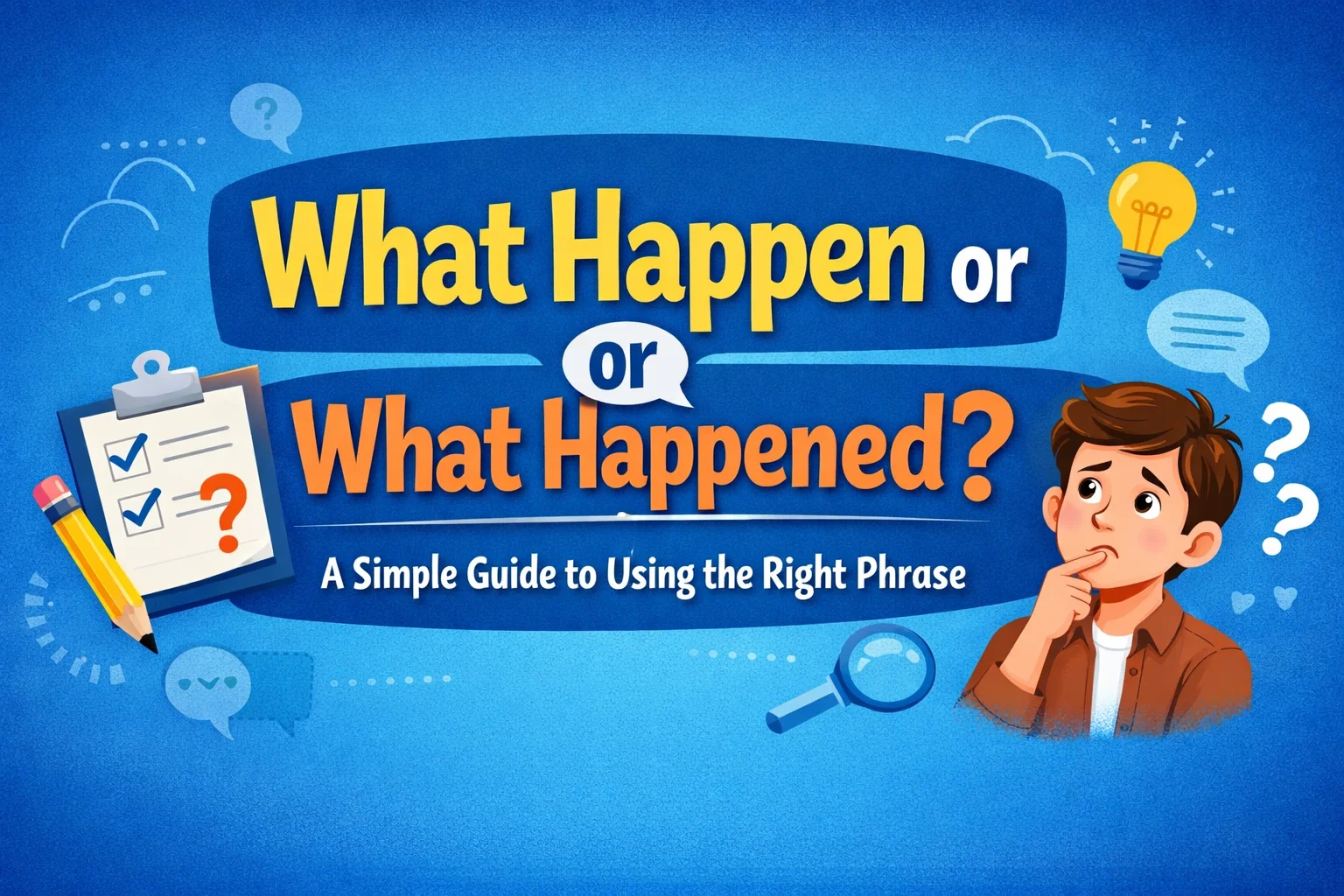
Many people feel confused when choosing between “what happen or what happened.” Both phrases look similar. But only one is usually correct in everyday English. If you speak or write English, you will face this question many times.
This small grammar mistake appears in conversations, emails, social media, and even blog posts. People often type “what happen” when they actually mean “what happened.” The difference may look small, but it matters in correct English.
Understanding what happen or what happened is not difficult. Once you learn a few simple rules, you will use the correct form naturally. This guide explains everything in very simple words.
We will explore meanings, grammar rules, examples, and common mistakes. By the end, you will clearly understand what happen or what happened, when to use each one, and how to avoid errors in daily communication.
Understanding the Meaning of “What Happen or What Happened”
Before learning grammar rules, it helps to understand the meaning.
Both phrases relate to something that took place. People usually ask this question when they want to know about an event or situation.
But there is an important difference.
“What happened” refers to something in the past.
“What happen” normally appears only in certain grammar structures.
For example:
Correct:
- What happened yesterday?
- What happened at the meeting?
Incorrect:
- What happen yesterday?
When people search what happen or what happened, they are usually trying to learn which one is correct in normal conversation. In most cases, “what happened” is the correct choice.
The Basic Grammar Rule Behind It
The difference between what happen or what happened comes from verb tense.
English verbs change depending on time.
- Happen = present tense
- Happened = past tense
If you are asking about something that already took place, you must use the past tense.
Example:
Present tense
- Things happen for a reason.
Past tense
- Something happened last night.
So when someone asks about an event that already finished, they should say:
- What happened?
This simple rule solves most confusion about what happen or what happened.
Why “What Happened” Is Usually Correct
In everyday conversation, people usually ask about past events. That is why “what happened” is the most common phrase.
Imagine your friend arrives late and looks upset. You might ask:
- What happened?
You are asking about something that already occurred.
Here are more examples:
- What happened at school today?
- What happened during the game?
- What happened to your phone?
In each example, the speaker wants information about the past. That is why “what happened” works correctly.
When learning what happen or what happened, remember that questions about past events always use happened.
When “What Happen” Can Be Used
Some learners think “what happen” is always wrong. That is not completely true.
It can appear in sentences with helping verbs.
Examples:
- What will happen tomorrow?
- What could happen if we leave early?
- What might happen next?
In these sentences, the helping verb controls the tense. The base verb remains happen.
So the full structure looks like this:
Helping verb + happen
Examples:
- What did happen yesterday?
- What could happen now?
- What might happen later?
This explains why people sometimes see happen used correctly.
But when asking a simple question alone, “what happened” is still the right choice.
Examples of Correct and Incorrect Usage
Examples make grammar easier to understand. Let’s compare correct and incorrect sentences related to what happen or what happened.
Incorrect sentences:
- What happen yesterday?
- What happen at the party?
- What happen to your car?
Correct sentences:
- What happened yesterday?
- What happened at the party?
- What happened to your car?
Examples with helping verbs:
- What will happen tomorrow?
- What could happen next?
- What might happen if we try again?
By studying these examples, the difference between what happen or what happened becomes very clear.
Why Many People Make This Grammar Mistake
Many English learners struggle with what happen or what happened. There are several reasons.
First, spoken English often sounds fast. People may hear “what happen?” and repeat it without noticing the missing “ed.”
Second, many languages do not change verbs the same way English does. This makes verb tense confusing.
Third, social media and texting encourage quick writing. People often skip grammar rules when typing messages.
For example:
- What happen bro?
- What happen here?
Even native speakers sometimes write this casually online. But in formal writing or professional communication, “what happened” should always be used.
Real-Life Situations Where You Use “What Happened”
Understanding real situations helps you remember grammar rules.
Here are common moments when people ask what happened.
At work:
- A meeting was canceled.
- You ask: What happened?
At school:
- A teacher is absent.
- Students ask: What happened?
In daily life:
- A friend looks upset.
- You ask: What happened?
News situations:
- People hear about an accident.
- They ask: What happened?
These examples show why the phrase appears often in conversation.
Learning what happen or what happened helps improve communication in these everyday situations.
How Verb Tenses Affect the Sentence
Verb tense controls the time of an action.
Understanding this idea makes what happen or what happened easier.
Present tense examples:
- Things happen quickly here.
- Problems happen sometimes.
Past tense examples:
- Something happened yesterday.
- A mistake happened earlier.
Future tense examples:
- Something will happen soon.
- What will happen next?
Once you understand tense, you will never confuse what happen or what happened again.
Tips to Remember the Correct Phrase
Simple tricks can help you remember the rule.
Tip 1: Think about time
If the event already finished, use happened.
Example:
- Yesterday = happened
Tip 2: Listen for helping verbs
If a helping verb appears, use happen.
Example:
- Will happen
- Might happen
Tip 3: Use the simple question rule
If you ask a direct question about the past, use what happened.
Example:
- What happened here?
These easy tips remove most confusion around what happen or what happened.
Common Grammar Mistakes Related to This Phrase
Learners often make several related mistakes.
Mistake 1:
Using present tense for past events.
Wrong:
- What happen yesterday?
Correct:
- What happened yesterday?
Mistake 2:
Mixing verb structures.
Wrong:
- What did happened?
Correct:
- What did happen?
Mistake 3:
Dropping helping verbs.
Wrong:
- What happen tomorrow?
Correct:
- What will happen tomorrow?
By avoiding these errors, your English will sound more natural and correct.
How Native Speakers Use the Phrase
Native English speakers almost always say “what happened.”
It is a natural and automatic phrase in conversation.
You will hear it in:
- movies
- TV shows
- news reports
- everyday conversations
For example:
Friend: “I lost my phone.”
You: “Oh no! What happened?”
Because this phrase appears everywhere, understanding what happen or what happened is important for fluent English.
Why Correct Grammar Matters in Writing
Grammar mistakes can affect how people see your writing.
If a blog post uses “what happen” incorrectly, readers may think the content is not professional.
Correct grammar improves:
- credibility
- readability
- SEO performance
- user trust
This is especially important for bloggers, students, and professionals.
Using the correct form “what happened” helps your writing look polished and reliable.
FAQs
1. Is “what happen” grammatically correct?
Usually no. The correct phrase is “what happened.”
However, “happen” can appear with helping verbs like “will” or “might.”
2. Why do people say “what happen”?
Many people type it quickly online or forget the past tense rule. It is common in casual texting but incorrect in formal English.
3. When should I use “what happened”?
Use “what happened” when asking about something that already occurred in the past.
Example:
What happened at the meeting?
4. Can I say “what did happened”?
No. The correct sentence is “what did happen.”
After “did,” the verb returns to its base form.
5. Is “what happened here” correct?
Yes. This is a very common and correct sentence.
Example:
You arrive somewhere and see a mess.
You ask: What happened here?
6. Which is more common: what happen or what happened?
“What happened” is far more common in everyday English. It is the correct phrase in most situations.
Conclusion
Understanding what happen or what happened is easier than many people think. The key difference comes from verb tense.
If you are asking about something that already occurred, the correct phrase is “what happened.” This form is used in most conversations, questions, and written communication.
The base verb “happen” appears mainly when helping verbs are present, such as “will happen” or “might happen.” Without those verbs, it usually sounds incorrect.
By remembering these simple rules, you can avoid common grammar mistakes. Your English will sound more natural, clear, and professional.
Next time you hear someone ask about an event, you will instantly know the right phrase to use.
So the next time you wonder what happen or what happened, you will confidently choose the correct one.